
The longevity picture
Cardiovascular fitness has long been recognised as a powerful predictor of longevity. Now muscle power is attracting attention, as research shows the message for New Zealanders is simple: don’t just train to stay strong, train to stay powerful.
For decades, cardiovascular fitness, commonly assessed through measures such as VO max, has been central to our understanding of exercise and long-term health. Strength increasingly finds its way into that conversation, as one study reports roughly six- to seven-fold differences in mortality hazard between the lowest and highest-power groups. Exercise New Zealand chief executive Richard Beddie says such findings warrant greater attention to power in the way people exercise as they age.
Power versus strength
The 2025 study weighs up muscle power versus strength as a predictor of longevity for those middle-aged and older, and followed almost 4000 men and women aged for a median of 10.8 years. Men in the lowest-power group had 5.88 times the mortality hazard of those in the highest-power group. For women, the equivalent figure was 6.90. These associations remained after adjustment for age and several other health factors. Researchers found that muscle power relative to body weight was a much stronger predictor of mortality than relative handgrip strength.
Emerging research highlights the need to distinguish between how much force someone can produce and how quickly they can apply it, also known as power. “Strength is the capacity to produce force. Power combines force with speed. Getting out of a chair, climbing stairs or taking a sudden step to regain balance all involve applying strength at speed,” says Richard. “Everyday life doesn’t happen slowly. If you stumble, you need to react quickly.”
Falls and maintaining independence
“Exercise for longevity is also about maintaining the physical capacity to keep doing the things that make life worth living,” Richard says. “We’ve spent years telling people to stay fit and build strength as they age. Those messages remain important. Now we need to make sure power is part of the conversation too.”
More research published in the journal Experimental Gerontology this year paints an even clearer picture. In more than 2000 participants aged 65 and older, low sit-to-stand power was associated with poorer functional ability and higher all-cause mortality in both men and women. Among men, it also had a stronger association with slow walking speed than low handgrip strength. And in the Journal of Sport and Health Science, a study involving 1876 adults aged 65 and older linked low sit-to-stand power with a history of falls and fractures in men and hip fractures in women. Richard says these findings underline the practical importance of maintaining physical capability through middle and older age, from managing stairs to continuing recreational activities.
What does this mean when you go to the gym?
These studies establish associations between muscle power and longevity, though they don’t prove that power training itself extends lifespan or that it should take priority over cardiovascular exercise. Exercise New Zealand encourages people to develop power alongside cardiovascular fitness and strength.
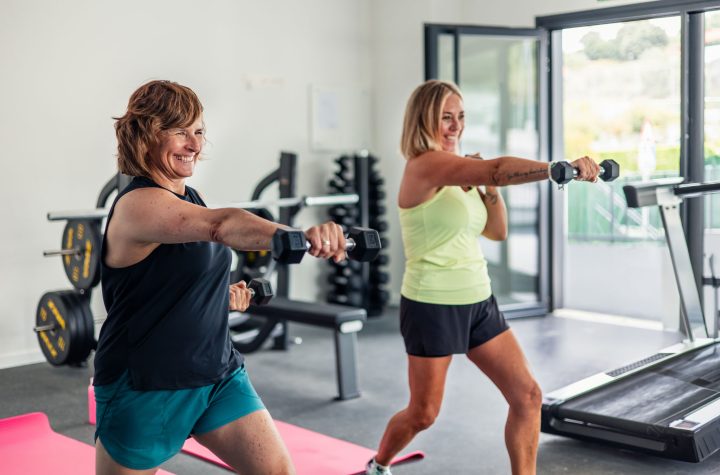
For the average gym-goer, this can mean building a foundation of strength and movement skills, then learning to move with appropriate resistance more quickly while maintaining good technique. The approach should reflect each person’s age, ability, experience and health. A registered exercise professional can help people incorporate suitable power exercises into their programme and progress them appropriately. Richard says, “The message for New Zealanders is simple: don’t just train to stay strong, train to stay powerful.”