
Inside the artist: Fine Art Studio with Marek Maciejewski
Multidisciplinary artist and fine art photographer Marek Maciejewski sits down with Metropol.
Q: Marek, tell me about your journey into the industry – where it began and how it flourished?
A: This is both a simple and a difficult question. Simple, because photography has been part of my life for many years. Difficult, because it is hard to explain in just a few sentences how I found myself where I am today.
For a long time, I worked in a completely different industry, but photography was always there in the background. I took photos after work, at weekends, and whenever I had the chance. Over time, it stopped being just a hobby — I knew that one day I wanted to give photography more of my time and try to turn it into something bigger.
I almost always have a camera with me. You never know when you might come across beautiful light, an interesting person, or simply a moment worth preserving. I enjoy observing people and places. Often, it is those ordinary, unplanned moments that become the photographs that mean the most to me later on.
If I go back around ten years, I was photographing many different events. Most often these were showjumping competitions, though there were other assignments too. It was a very valuable time — it taught me how to work under pressure, make quick decisions, and capture moments that sometimes last only a fraction of a second.
In 2019, I had the opportunity to photograph Iga Światek, who is now world number one in women’s tennis. I also photographed one of Poland’s most recognisable movie actor after being invited to Melbourne. Those projects were certainly important, but what I value most are the people I met and the stories I was able to come close to, even if only briefly.
In the meantime, I also began working in documentary photography. I received recognition at the International Photography Awards (IPA) in the Politics and Press category for photographs I took on black and white 35mm film in Auckland.
Perhaps this excerpt from my bio gives a clearer sense of what photography means to me:
“You could say that there is such a thing as the psychology of photography. There is a deeper reason why a photographer wants to take a photograph, and why a person may want to be in it. This is not something that can be achieved through a casual snapshot in the digital age of artificial intelligence, when almost anyone can take hundreds of photos on a smartphone without thinking — and forget by the next day that they were ever taken.
Time passes, and with it the stories of human lives — individual, unique journeys shaped by a particular combination of events and experiences, yet universal in their meaning. Many people in modern society live at speed, losing their sense of the uniqueness of their own lives and identity. In a way, they become invisible to the world — that is how they may feel inside, and how they may see their everyday surroundings. Yet the opposite is true: every person is unique, and there will never again be anyone exactly like them in this world.
My photography is an attempt to capture the uniqueness of every person. I work, among other areas, in portrait photography and what could be described as therapeutic photography. In the latter case, when someone comes to me to be photographed, the main purpose is to capture their individuality and help restore their sense of self-worth. Every photograph is an individual story.”
The desire to photograph people, and to create photographs for people, has always been very strong in me
— and it still is. If someone gets in touch with me, they will not be met with a refusal, provided the circumstances allow it.
And so, step by step, I arrived at where I am today. I photograph primarily for people — with the thought that somewhere on the other side, someone is looking at an image created by a person. By a photographer who may have flown or travelled for many hours to be in that particular place and make a real photograph.
Q: What is a fine art print?
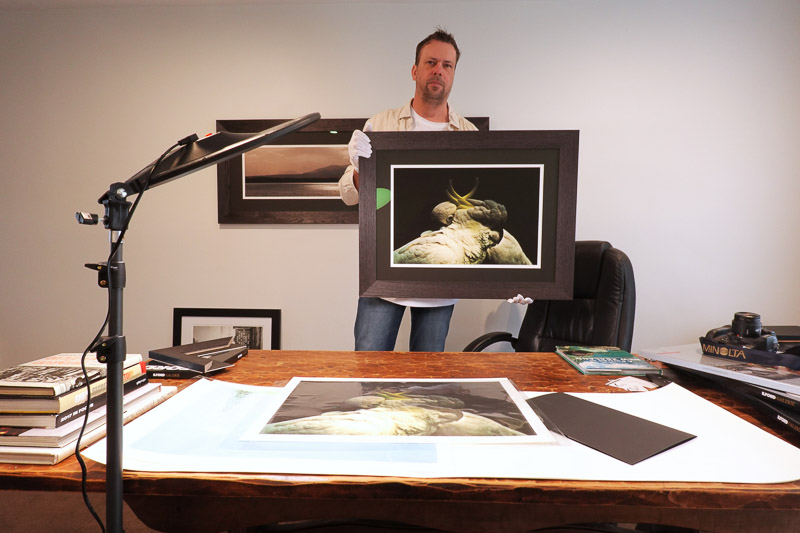
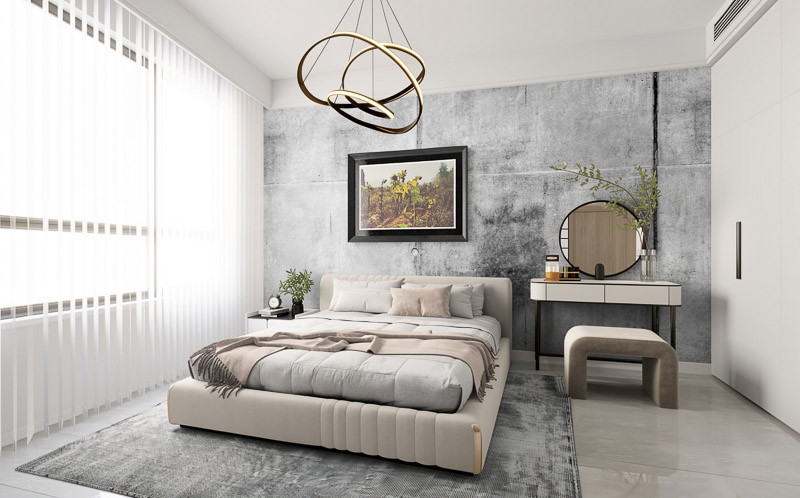
A: Fine art photographic printing is, for me as a photographer, the moment when a digital image or a 35mm film negative takes on a physical, museum-quality form — becoming a work intended to last for decades, rather than merely a season on social media.
Fine art printing from the French beaux-arts, meaning “fine arts” refers to the highest standard of photographic print: produced with pigment inks on acid-free, archival paper. But it is not only about the paper — every component used in the framing and presentation is made from acid-free materials.
Everything is selected with galleries, collectors, and the long life of the image in mind. This is not simply “a nice print from a lab”; it is a tangible realisation of a photograph, often released as a limited edition.
Q: Tell me about Fine Art Studio, what it offers, and who it serves?
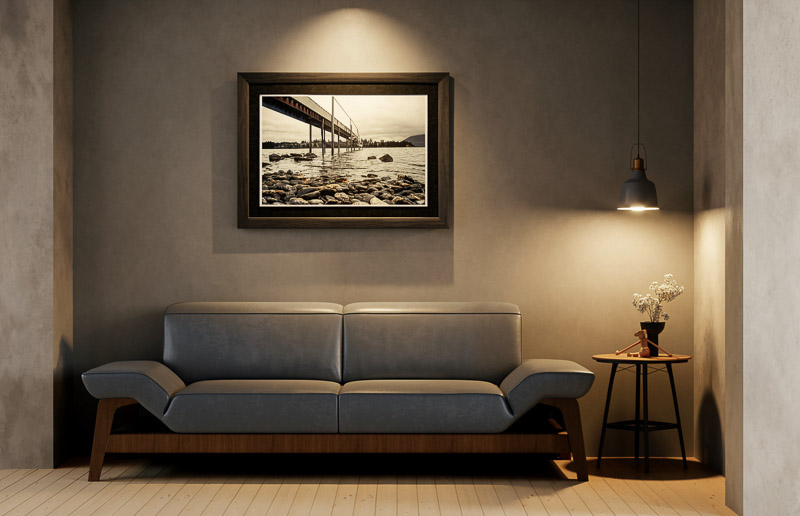
A: My Fine Art Studio was created for interiors where art is not merely decoration, but an integral element that shapes the atmosphere, character and emotional experience of a space.
The first pillar of the studio is my original fine art photography, created through a fully handmade process
— from the initial inspiration and concept, through to image creation and final refinement. Every work is unique, developed with exceptional attention to light, detail, composition and mood. Selected photographs are available in the online collections on my website, for those seeking timeless art ready to become part of their interior.
The second, and particularly distinctive, part of the studio’s work is bespoke commissioned pieces. This offering is for clients seeking something beyond a ready made artwork — a piece created exclusively for them and their space.
A commission may include a single photograph or a carefully designed series, such as five or seven cohesive works. Each project is developed in response to the character of the location, its architecture, colour palette, light and the client’s personal vision. The photographs can be created for a private residence, apartment, office, hotel, prestigious restaurant, or another exceptional setting.
The creative process takes time, as every stage is individually considered and refined. From selecting the subject and shaping the emotional quality of the image, through to creating the full series and choosing the framing, every detail matters. The result is a unique collection of photographs, framed to harmonise naturally with both the interior and the character of the works themselves. It is a cohesive, personal installation that subtly enhances the prestige of a space and remains part of it for years to come.
There is also a third area of my work. I support other artists—painters and photographers—by producing high-quality fine art prints of their work. This allows them to share their creativity with audiences not only through computer and phone screens, but also by offering carefully crafted physical prints.
Q: Tell me what art and creativity means to you, and what influences your style/work?
A: Art and creativity are not, to me, about mass production or images automatically generated by AI. They are my unique vision as a human being and an artist — a way of conveying emotion, sharing my own perspective on reality, or drawing the viewer’s attention to an important issue.
In my work, I value honesty and authenticity above all else. I believe art should show the world as it truly is, rather than as we might wish it to be. My style is shaped by everyday observations, human emotions, and subjects that are often uncomfortable, overlooked, or left unspoken. I want my work not only to be aesthetically pleasing, but also to encourage reflection and remain with the viewer long afterwards.
Q: How can someone determine which art print, and style, suits them and their home?
A: Choosing the right art print is, at its heart, a fairly personal matter – it combines a thoughtful look at both the person and the space where the piece will hang. Before you start searching, it’s worth thinking about who the future owner actually is: what they do day to day, what they’re passionate about, what they like. Because even if the artwork doesn’t directly reference their interests, it should somehow “play” with their personality, stir some emotion, tell their story.
The space matters too, but it shouldn’t box you in. Sure, the wall colour, the style of the home, or the size of the wall are all worth considering, but not so you can find something that matches perfectly – rather, so you can see what will genuinely look good in that particular spot. Sometimes a piece fits seamlessly with what’s already there, and sometimes it does the opposite – it creates a nice, deliberate contrast that brings the whole room to life.
And this brings us to something important: often it’s not the artwork that adapts to the home, but the home that gradually “settles into” the artwork. Art has a way of setting the tone for a whole space, bringing in a mood, changing how a room actually functions. The owner simply gets used to the piece, grows fonder of it over time, until eventually it becomes a natural part of the home – as if it had always been hanging there.
The most important thing? Listen to yourself. If a piece makes you smile, sparks warm feelings, or simply makes you want to keep looking at it – that’s usually a good sign. Because really, the best print is one that resonates with who you are, brings something into your home that you actually want there, and over time just becomes… home.