


Your guide to nuclear medicine and treatment: Reform Radiology
If your doctor or specialist has referred you for nuclear medicine imaging or treatment, you may have questions about what this involves.
These specialised imaging techniques offer accurate diagnosis, and treatment of a range of conditions, and is available from Reform Radiology’s state-of-the-art facility in central Christchurch. To provide you with peace of mind, their nuclear medicine specialists, Dr Lotte Steffens and Dr Stefan Gabrielson, answer their most frequent patient queries:
1. What is nuclear medicine?
Nuclear medicine refers to the well-established and safe practice of using small amounts of radioactive materials (called radiopharmaceuticals or tracers) to proactively diagnose and treat disease. Unlike X-rays or CT scans that look at the body’s structure, nuclear medicine shows how organs and tissues are working. The radioactive tracer is usually given through an injection into your vein, though sometimes it may be given by other routes, such as swallowing.
2. Are nuclear medicine studies safe?
Yes, nuclear medicine is considered safe. Very small amounts of radioactive material are used to diagnose disease, and radiation exposure is as low as possible, while still providing useful images. The imaging and treatment benefits are weighed against any potential risks, and your Reform Radiology specialist will ensure you are fully informed.
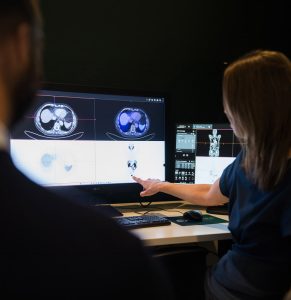
3. What is SPECT/CT and PET/CT imaging?
Our SPECT/CT and digital PET/CT are nuclear medicine scans that combine two imaging techniques in one clinic visit, each using different radiopharmaceuticals. SPECT and digital PET images are combined with a CT scan to provide detailed images of your anatomy. Patients are given a small amount of a radiopharmaceutical, which emits invisible signals captured by the imaging camera, allowing clinicians to see issues that may not yet be visible on other scans.
By using these specialised imaging techniques, Reform Radiology can detect a range of ailments such as: cancers (including breast, colon, melanoma, lung, neuroendocrine, and prostate cancers and lymphoma), musculoskeletal problems (such as recurring back pain), heart problems, assessment of lymphatic drainage, gastrointestinal complaints, thyroid and parathyroid diseases and even differentiating between different causes of dementia.
4. What is nuclear medicine therapy?
Nuclear medicine therapy (also called theranostics and radioligand therapy) uses radioactive materials to treat disease, particularly cancer. Unlike imaging scans that use small amounts of radiation to take pictures, therapy uses larger amounts of targeted radiation to kill cancer cells, leaving nearby healthy tissue unharmed.
5. How do I make an appointment?
Our nuclear medicine specialists are available for consultations with patients referred by an oncologist or other specialist.
If you require further information visit our website or contact us.