
Women of impact
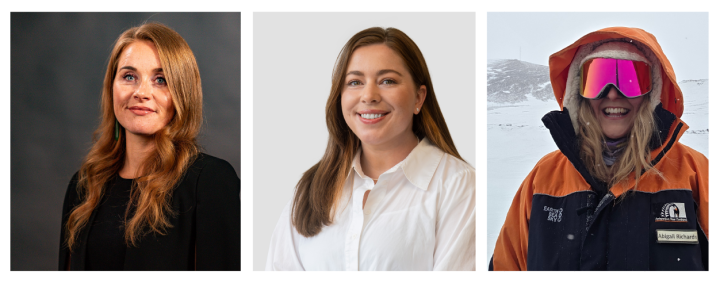
From asset strategy and valuation to engineering in Antarctica, meet three of the women helping shape how the built environment of Ōtautahi grows, functions, and feels.
Joanna den Hollander
National Asset Manager, Ngāi Tahu Property
As the national asset manager for Ngāi Tahu Property, Joanna is responsible for the group’s property investment portfolio across Te Waipounamu.
How did you get your start in the industry? My dad was a property valuer and I always had a keen interest in what he did professionally. After high school, I studied at Lincoln University and completed a Bachelor of Commerce in Valuation and Property Management. While studying, I was particularly drawn to property management because of the people and relationship side of it. I spent years managing shopping centres in Christchurch and Queenstown before joining Ngāi Tahu Property.
What’s your ‘why’ for doing what you do? When I joined Ngāi Tahu in 2021, I was looking for an organisation whose values aligned with my own, and I’ve absolutely found that here. More broadly, I love that property has such reach, diversity and impact. It touches every person and every sector in some way.

Achievements you’re most proud of? I sit on the Diversity, Equity and Inclusion Committee for the Property Council of New Zealand and was elected deputy chair last year. I’m incredibly proud of the work we do to showcase diversity in the industry and deliver initiatives that help create a more inclusive property sector.
What would be your dream project? Anything large-scale and community-focused that I could work on alongside a great team. To me, property is ultimately about people and creating environments where people can thrive, whether that’s at home, play or mahi.
Biggest challenge you’ve had to overcome? This is a tough one to talk about, but probably overcoming limiting self-belief and daring to dream big enough. I think most people experience imposter syndrome to some extent, and learning how to keep that in check while continuing to back yourself is an ongoing journey.
How are women shaping the built environment of Christchurch and Canterbury? Women are bringing diverse perspectives, collaborative leadership styles, and a strong focus on people-centred outcomes, all helping shape a more thoughtful and inclusive built environment.
Why is that important? Because property delivers spaces for communities. If our workforce doesn’t reflect the people using those spaces, we risk blind spots. Diverse perspectives lead to better outcomes.
How will our built environments evolve in the next 20 to 50 years? They’ll continue to reflect changing lifestyles and values rather than just advances in construction or technology. Flexibility will be key, along with climate resilience and sustainability. I’d also love to see more mixed-use environments with a stronger focus on connection and community, and more ‘third and fourth spaces’, places beyond home and work where people can gather and belong.
Biggest challenges ahead? Climate change will only become a bigger challenge going forward, both in terms of resilience and the environmental impact of the property industry itself. Incorporating climate resilience into planning, development and infrastructure will become essential alongside reducing emissions and designing more adaptable spaces. Long-term thinking will be critical, creating places that are not only commercially successful today but still functional, connected and relevant for future generations.
___________________
Anna Kennedy
Director of Valuation Services, FordBaker Valuation
A registered valuer specialising in commercial and industrial property, Anna was named a Woman of Impact in Property for 2026 by the Property Council New Zealand.
How did you get your start in the industry? I’ve always had a keen interest in property. I remember spending time with my grandparents in the Marlborough Sounds, ranking residential listings in the old Harcourts Blue Book. My interest in valuation was sparked by my mother, who saw a newspaper article about a prominent female commercial valuer and suggested it as a career path.

I went on to study a Bachelor of Land and Property Management at Lincoln University in 2014. This lead to my role at an international valuation practice, where I became a Registered Valuer, which has ultimately lead to my role as a director of Valuation Services at FordBaker Valuation.
What’s your ‘why’? I’m fascinated by how demographic, social and economic forces influence market behaviour and ultimately shape the built environment we live and work in.
How are women shaping our built environment? Canterbury has a high calibre of property professionals and it’s been impressive to see how the city has responded and rebuilt following the earthquakes. There is also a strong and growing group of wāhine toa across the sector.
We established Wāhine in Property (WIP Collective) in 2023, and it now has over 200 members in Canterbury, providing a platform for connection, support and professional development.
Why is that important? I’ve benefited from mentorship and support from many wāhine toa throughout my career. Continuing to foster diversity ensures people feel supported to contribute, grow and lead authentically.
How will our built environments evolve in the next 20 to 50 years? Christchurch is experiencing a strong resurgence following earthquake recovery. The new stadium has helped reshape the skyline and inject energy into the CBD, alongside new commercial and residential development. However, challenges remain. New Zealand is exposed to global economic volatility, and regulatory and planning pressures continue to add complexity. Environmental considerations, particularly insurance, will also increasingly influence development decisions and outcomes.
___________________
Abigail Richards
Project Manager, Antarctica New Zealand (Scott Base Redevelopment & Ross Island Wind Energy)
Coordinating delivery of infrastructure that supports research in Antarctica, Abigail was named a Woman of Impact in Property for 2026 by the Property Council New Zealand.
How did you get your start in the industry? I’ve always been keen on maths, but sitting still at school wasn’t for me. Civil engineering appealed because of its diversity. After graduating, I worked as an on-site engineer, including a project in the Isle of Man and later Covid-19 surge hospital projects during the pandemic.
What’s your ‘why’? I’m driven by meaningful, legacy projects that have lasting impact beyond the physical asset. I enjoy solving complex problems and working in challenging environments.

A big part of my why is also representation. Showing other paths to every girl who doesn’t see herself in traditional female roles – you can be the engineer, the architect, or the project manager.
Projects you’re most proud of? My involvement in the Covid-19 surge hospitals in Wales, including the Dragon’s Heart Hospital in the Principality Stadium, which was rapidly transformed into a temporary hospital with capacity for up to 2000 patients, created to support the NHS during the peak of the pandemic. The Lakeside Wing at the University Hospital of Wales was also delivered in just 107 days and continues to support patient recovery today.
How are women shaping our built environment? Women are increasingly visible in leadership and technical roles across New Zealand’s built environment. Women bring diverse perspectives, improving collaboration, and challenging traditional industry norms.
Why is that important? Women are helping change long-standing norms by bringing different strengths and perspectives. Construction needs a balance of compassion and bluntness. Women are fostering stronger collaboration and better outcomes. It’s not about fitting into the industry as it is – it’s about evolving it for the better.
How will our built environments evolve? Sustainability, resilience and adaptability will be central. Infrastructure will need to respond to climate change and changing ways of living and working. Technology will play a bigger role, but human-centred, flexible design will be just as important.