
Welcome home
The new stadium is the last of the 16 anchor projects considered necessary to regenerate the city centre. It will add to the city’s vitality, catalyse further development, and help re-establish Christchurch as a sporting and cultural capital.
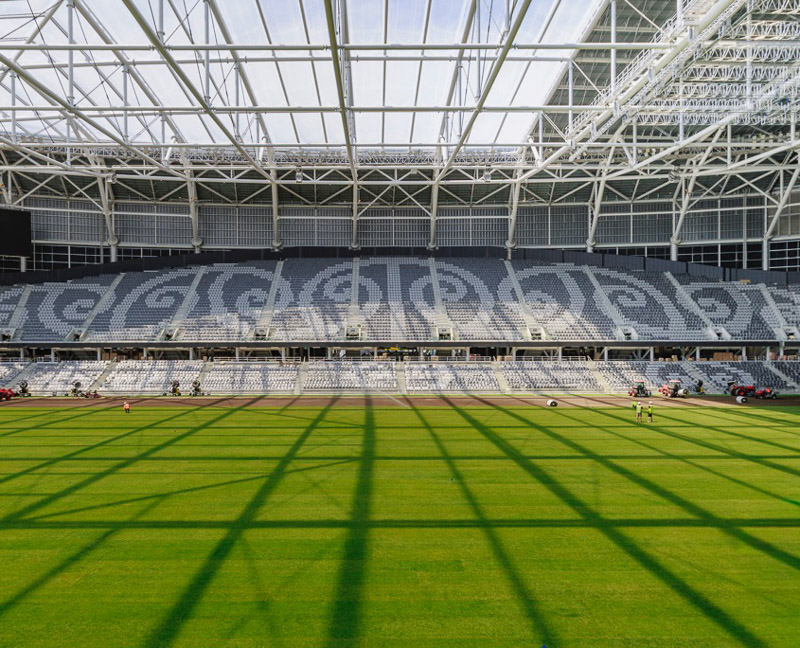
With the rain hosing down outside and gale-force winds buffeting the city, the decision to put a retractable roof on Christchurch’s long-awaited new stadium was validated on its very first day.
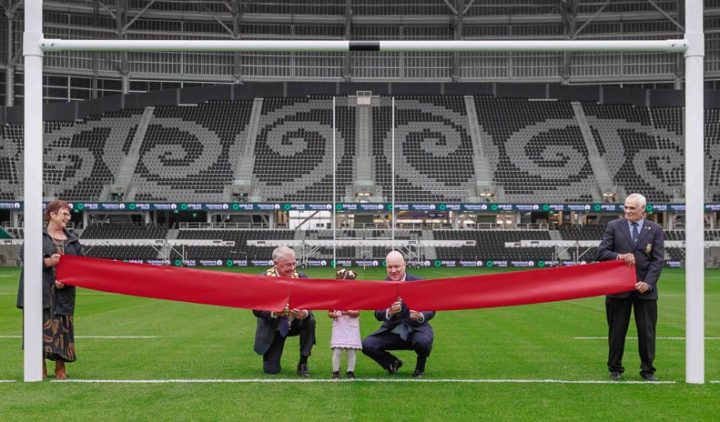
The weather might have been causing a storm outside, but inside the mood was unmistakably bright when, on the morning of 27 March 2026, the $683 million One New Zealand Stadium at Te Kaha was officially opened. The red ribbon was cut by Prime Minister Christopher Luxon and Christchurch mayor Phil Mauger just before rugby great Dan Carter kicked the first ball through the posts.
As the doors were officially opened on the largest project ever undertaken by the Christchurch City Council, the sense of occasion was as much about the future as it was about the journey to get there.
Mayor Phil Mauger captured the atmosphere perfectly, declaring to the crowd, “Isn’t this grouse… warm, dry… this is better than sliced bread.” After years of planning, setbacks, and debate following the devastating 2011 Christchurch earthquake, the moment carried deep significance for the city.
“This day has finally arrived,” Mayor Phil says, reflecting on a project many once doubted could be delivered.
“But here we are, on time. It is a fantastic result… and a real landmark moment.
“We’ve got Christchurch’s best hospitality and accommodation, which is already igniting new momentum. Streetscapes have been upgraded with a better pedestrian environment and improved connections. This place is not just a home for sport. It’s a world-class multi-use venue, a place built for rugby, football, league, concerts, expos, festivals and sports that we haven’t even imagined yet, with a capacity of more than 36,000 people at concerts. Christchurch has just become a serious stop on international touring circuits.
“It is with immense pride that we open the doors to this wonderful new stadium, a symbol of enduring strength, a catalyst of our future and a gift to the people across Aotearoa,” says Mayor Phil.
Now a striking feature of the central city, the stadium represents far more than steel and concrete. Nearly 4000 workers contributed around 2.4 million hours to bring the venue to life, with the majority of the work – about 85% – sourced from local subcontractors. Mayor Phil described it as “a true reflection of passion, skill and tireless commitment,” highlighting the strong Canterbury backbone behind the build.
Global destination
Prime Minister Christopher Luxon echoed that sentiment, calling the stadium “a dream that we’ve all been waiting to see happen” and positioning Te Kaha as a symbol of Christchurch’s resilience and resurgence. “This represents Christchurch’s emergence… a city of the future,” he says.
Designed as a fully roofed, multi-use venue, the stadium is expected to host more than 200 events annually, from rugby and league to concerts and festivals. Prime Minister Luxon noted its national significance: “This is going to be a venue celebrated not just in Canterbury, but across the whole country,” he says.
“This represents Christchurch resilience, its emergence from the devastation of those earthquakes and to everyone who has responded, survived and worked so hard to rebuild. This city is now humming as an economy. It’s a growing population, and it has a really positive fire when we come in from outside to see it. It’s a city of the future, and the stadium is certainly a very, very big part of that.
“This is the city that’s always home to me. It’s a city that is booming and it can look forward to growing, I think, even more.”
For a city that spent over a decade without a major stadium, the impact is expected to be immediate, economically and culturally. With projections of over half a million visitors each year and tens of millions in economic benefit, Te Kaha is poised to re-establish Christchurch as a major events destination.
But beyond the numbers, both speakers returned to a simpler idea: connection. “Most importantly,” Mayor Phil says, “it’s a place for our people… where families can make memories.”
The final of 16 anchor projects considered necessary to regenerate the city centre following the catastrophic sequence of major earthquakes that devastated the city in 2010 and 2011, Christchurch is finally back in the game.