
Shear joy
Words: Nina Tucker | Images: Dorothy McLennan
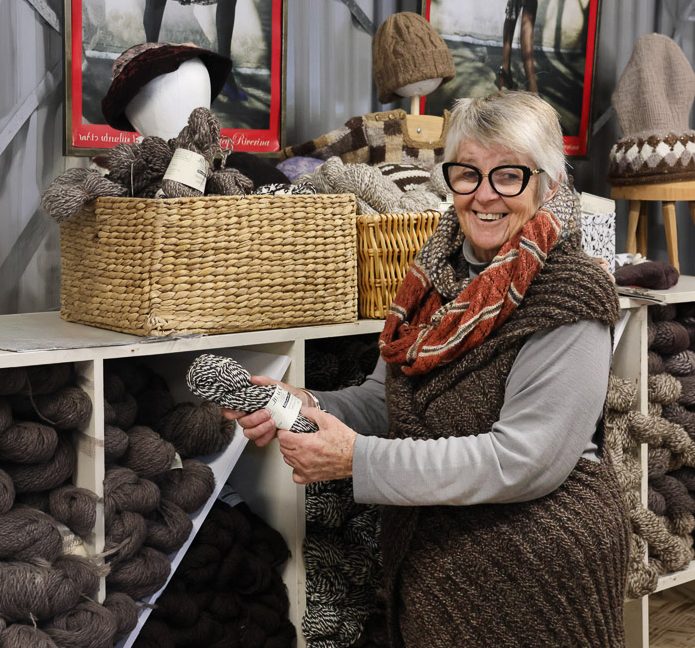
Beverley Riverina Forrester’s award-winning wool fashion business was born from her rural North Canterbury farm and innovative, optimistic mind – a venture that took garments to New Zealand Fashion Week and international runways, and knitting kits to the world.
I had to wade through sausage-making courses and friendly visitors before securing space amongst Beverley Forrester’s busy schedule. The Leithfield local – who was awarded a Member of the New Zealand Order of Merit this year – had just finished bottling up pears and peaches left by friends on her doorstep earlier that day when our 4 o’clock meeting rolled around.
The honour, which Beverley first believed to be “a scam”, boils down, in her eyes, not to her lifetime of commitment within the wool, fashion and farming industries, but to those whose company she’s enjoyed along the way. “When you have an accolade, you make sure that those grassroots people [who supported you] are at the table with you.” Beverley lives by the same sentiment found in most small towns: “It’s what we do, you’re part of a community. You go to the community events and you work at the working bees. You do what you can,” Beverley says. “That’s what the world’s all about, isn’t it? Everybody just helps each other.”
She does that, and then some. Beverley has judged at the American Sheep Show, Eugene, USA but also in Melbourne.
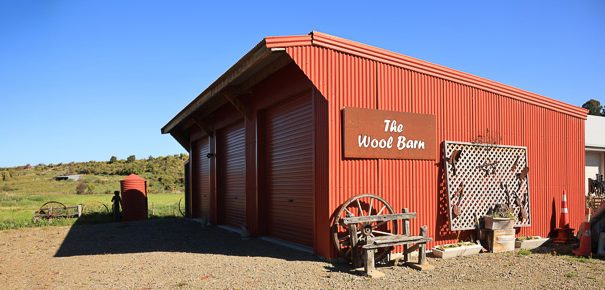
She’s staged shows on Italian cruise ships out of Sydney Harbour (selected as one of just eight designers) but still teaches her craft to school students. She’s written 60 knitting patterns for her business, and also a book called The Farm at Black Hills where royalties created scholarships through Rural Women New Zealand. She takes tours at her Leithfield home, showcasing The Wool Barn and Riverina Gardens, and volunteered at the Special Olympics held in Christchurch’s Parakiore last December. “In life, you take an opportunity and say yes, and then you wonder how the heck you’re going to do it,” she laughs.
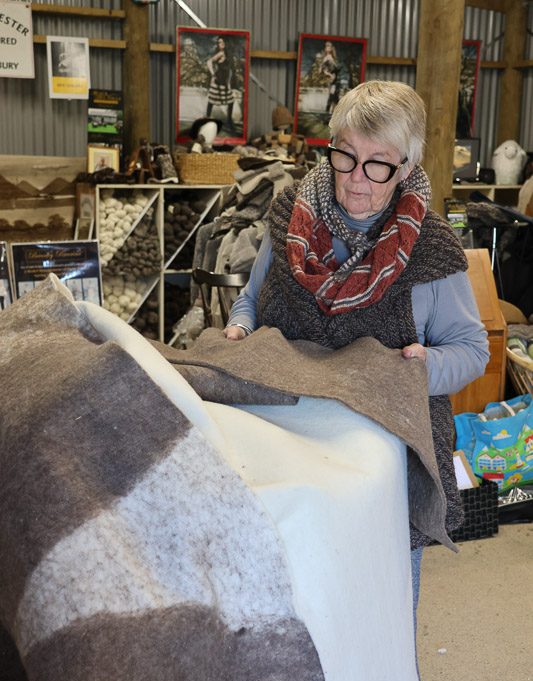
It’s that attitude that left the Kings Honours List team scrambling to reach and formally recognise Beverley’s services – she was running out the door on the way to the Canterbury Royal A&P Show of New Zealand when they rang again and said they would re-send the email. To a third generation representative of Rural Women New Zealand, a long-serving member of the Canterbury Agricultural and Pastoral Association, founder of Beverley Riverina Knitwear, she now finds her name in the 2026 Kings Honours List.
Weaving her own path
Born into a farming family with community at its core, Beverley grew up around New Zealand’s favourite fibre; her grandmother and mother taught her to knit and crochet. She transferred from the North Auckland farm (passed down the female line) to Christchurch when studying to be an occupational therapist, and in the early 2000s, traded in that career to convert a sheep and beef farm to black and coloured sheep. “That was a big no-no,” Beverley remembers, “having black sheep stuck in the front paddock.” (Dark wool was considered commercially undesirable and less profitable than white wool because it couldn’t be easily dyed; eventually becoming a metaphor for bad luck). She didn’t mind the shock it brought to the community, Beverley wanted to create naturally-coloured, natural-fibre no-chemical hand-knitted products.
Growing up watching her mother’s involvement in women’s advocacy and empowerment, Beverley knew to knuckle down and trust her path – whether that was leaving the family farm for her own career, building a brand, or finding herself as the only woman within rural lobby organisation Federated Farmers. “There were times when I was the only woman amongst it.
But you just got on with it. I saw no gender difference,” she says. “I was allowed to spread my wings a bit, and people got to know me as Bev, not just as ‘wife of Jim’.”
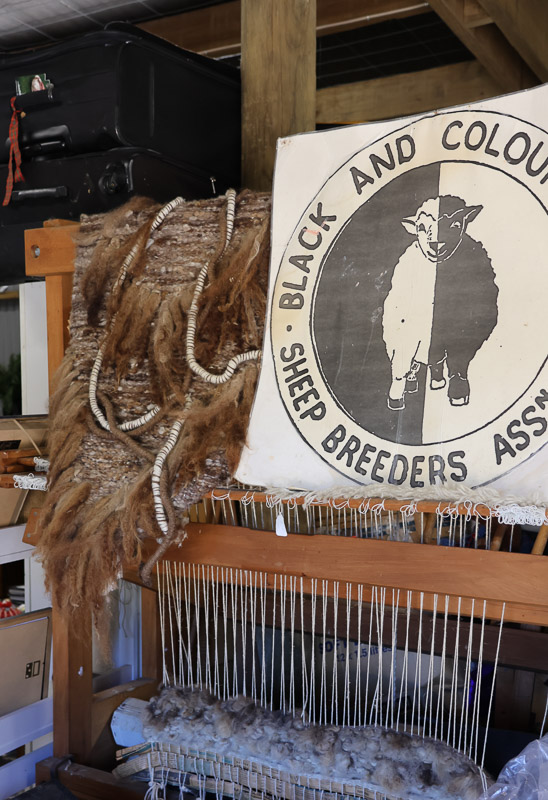
Beverley began exhibiting her woollen crafts internationally, involved in every aspect of yarn production to exports, and Beverley Riverina Knitwear became a national – soon to be international – success. She won the 2003 Her Business Network Award at the NZ Businesswoman of the Year Awards and the 2006 New Zealand Century Farm and Station Award, winning again in 2021. In 2007, Beverley expanded her products and knitting kits to the United Kingdom and United States, all from her North Canterbury base. The natural-coloured undyed products once thought to be an impossible feat became her point of difference.
Innovation through evolution
When wool, and the way people wear it, evolved, Beverley’s business offering did too. “You have to think outside the square and develop and manufacture a yarn that accommodates the new ideas. At the same time, you’re setting a new trend.” To this day, Beverley’s success has come from a forward-thinking mindset, and trust in herself and the value of wool. “What do people come to New Zealand for? What do they want to go home with? They want to go home with something that’s lightweight, probably a wearable wool garment or wool article, because we’re known for wool,” Beverley says. “And that’s the whole ethos of the world now, it’s hand-knitted, chemical-free, traceable.”
Sometimes, staying half a step ahead comes from taking one step back. “The joy for me now is seeing what my nephew (who now owns her farm) is doing on the land and ideas that he has that I would never have thought of, and that’s just the young attitude. They’ve embraced technology, they’ve embraced opportunity, they’ve embraced situations.”
Beverley’s latest innovation is co-ownership in Y Wool, a South Canterbury wool processing facility which produces wool mats for North Canterbury vineyards and gardens to suppress weeds. They have also shipped a 40-foot container to the USA filled with 100% wool knops (small, springy balls that act as a natural alternative to synthetic stuffing for cushions and mattresses). “It’s showing farmers that what they got an abysmal price for is now valued.” And when she put black wool through the processer for cleaning and a dark, hazy colour flecked with white came out the other side, Beverley immediately saw a new line of jackets and vests. “There’s never a mistake, because it evolves into something else,” she says.