

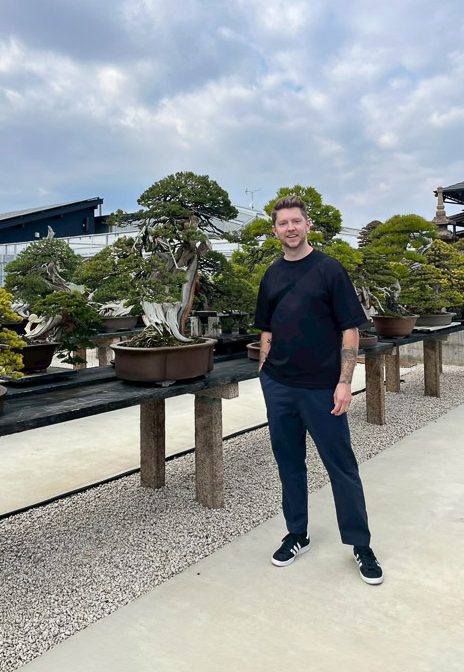
Beautiful bonsai
Beyond the art, there’s a science to keeping bonsai alive – and beautiful. New Zealand bonsai artist Aaron Curtis sits down with Metropol about the craft behind each branch, and his New Brighton store and café, Shiro Bonsai.
Aaron, tell us, how did your career in bonsai begin?
I originally started from being gifted my first tree, after a few months of maintaining it. I was looking for some bonsai pots locally but found them very hard to find in Christchurch. After importing our first shipment we found there was such a high demand, this soon evolved into what Shiro Bonsai is today.
What’s your advice to a first-time bonsai gardener?
Getting started from nursery stock trees is great because you know they are super healthy and usually have lots of branches to work with. Also, have a look around your own garden; azaleas or cotoneasters lend themselves to becoming beautiful bonsai.
If they have already been in the ground for a few years, you will have something of a larger trunk to work with which can speed up the process.
Walk us through a typical bonsai workshop?
When I teach, I always say every bonsai has a story, from how it was grown, where it was grown, and even what conditions it has had to withstand. This is what makes each tree unique.
In our six-week course we begin with our presentation, covering all the basics from care to soil types, where to keep your trees, and how to begin a bonsai. We start on the first nursery tree, pruning a few branches to open some space and lead your eye in certain directions to add movement to the tree. Understanding what branches to keep and remove is always important as you want to set the tree up to improve year after year, considering how branches would grow on a mature version. We learn how to apply wire and different techniques to style a tree.
We move on to juniper species which have such small foliage so it’s great to see instant results. Bonsai is always a long game with trees evolving year after year, but having a species that can transform within one styling session is rewarding for beginners. Usually every student in the workshop ends up with a completely different tree, even when they were identical to start with.
Midway through the course, we start on the final tree that is usually a spruce, and one with many more branches and fine wiring needed so it is good to have practice behind you. Putting time into every little branch and seeing results is incredible.
In the final session, we slip the trees into either ceramic or training pots, allowing space for growth and development. Each student can then access our monthly club days, which offers help along the journey and invites them into the community.
Email admin@shirobonsai.co.nz or visit shirobonsai.co.nz