

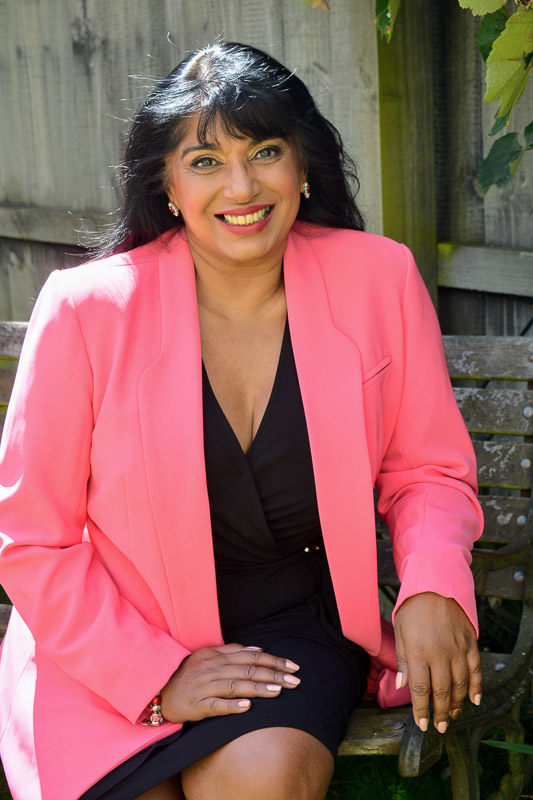
Surviving the unsurvivable: Sheena Hemens
In the space of a few weeks, Christchurch businesswoman Sheena Hemens lost her business, her relationship, her home and, worst of all, her daughter. She sat down with Metropol deputy editor Tamara Pitelen to reveal how she endured and why she now speaks openly about grief and resilience.
“Losing a child, or any loved one, is a subject that people don’t talk about in, you know, ‘polite society’. And you certainly don’t talk about how utterly broken you are, how lonely…”
On 9 June 2023, Christchurch businesswoman Sheena Hemens’ life was split cleanly in two by a phone call: life before she knew her daughter was dead, and life after. Her 27-year-old daughter Lauren, one of twins, was hit by a ute in Auckland while walking to work early one winter morning. She’d gone in earlier than usual so she could head away for a weekend break with her boyfriend. It was still dark. Residents in the street had not yet left for work, so Lauren parked on the opposite side of the road from where she usually did. As she crossed the street, the driver of the ute simply didn’t see her.
“She didn’t stand a chance,” Sheena says. Lauren’s death did not arrive as a single blow. It detonated in the middle of a cascade of losses that stripped away almost everything Sheena had built. In what felt like the blink of an eye, she experienced some of life’s most stressful events: the death of a child, business liquidation, the breakdown of a relationship, the loss of housing security, and the death of her beloved dog.
“It felt like the universe gave my life an enema,” she says. First, it was her business. Her restaurant, Maison de Crêpe, had been eight years of hard work, long hours and ambitious expansion plans. But in the wake of Covid, the business collapsed.
Maison de Crêpe
“Even though the business was popular, suddenly people were not eating out,” she says. “I had sunk everything into the restaurant and we were expanding. Before Covid, we were signing up two franchisees in Rangiora and Rolleston.”
Like many businesses, she took the government Covid loans to try to stay afloat. “We had two years to pay it back, which seemed like ages – until it wasn’t. Things hadn’t got back to normal. The cost of everything had gone up – staff, food – and we were still trying to pay rent we owed from the lockdowns. It just got to the point where we were insolvent.” Maison de Crêpe closed its doors in April 2023. Two months later, Lauren was dead.
The first weeks after her daughter’s death are difficult for Sheena to remember clearly. “Your brain just cannot function,” she says.
“It knows your body’s in trouble. Your brain protects you, so it just shuts you down.”
Her children, Lauren’s twin sister Charlie and younger brother Alex, were grieving too. “They leaned on me a lot, as they always have,” she says. “But I didn’t have a lot available.”
Friends showed up in extraordinary ways. They sent daily messages, dropped in quietly and made endless cups of tea. “They were worth their weight in gold,” she says. “When everything else went out the window, they were the thing that held.”

One thing that didn’t hold was her relationship. Just three weeks after Lauren’s funeral, Sheena packed a bag and went to sleep on a friend’s sofa. The death of her daughter had made it painfully clear that her partner could not cope with her grief.
“For his own reasons, he couldn’t support me, and it was very lonely,” she says. “I had no one to give me a hug, nobody to talk to about it. I couldn’t cry because he just couldn’t cope with it.
I felt betrayed.”
Making such a huge decision in the midst of grief was not something she had ever imagined. “The last thing you want to do when you have just buried your daughter is make massive life decisions,” she says. “But I had no choice.”
Sheena describes herself as someone who has always been able to handle life’s challenges. “If all the other things had happened outside of Lauren, I would have got through it. But Lauren was the Joker in the pack. Losing Lauren just took the legs out from under me.”
To add further pressure, her financial situation had become precarious. With no income and debts mounting, she lived on savings and credit cards until pride finally gave way and she walked into WINZ.
“My doctor had signed me off with a medical certificate. I had multiple grief trauma, and grief is exhausting. Stress and trauma are so exhausting. My body and brain essentially just shut down. There was no way I could have worked.”
Walking through the doors of the welfare office was one of the hardest things she had done. “I was so embarrassed,” she says. She was met, though, with incredible kindness. “They said, ‘This is why you’ve been paying your taxes all these years. Now we help you.’” The support allowed her the time to rest and recover that she desperately needed. “I learned that asking for help is not weak and is part of healing.”
Ruminating
For a long time after Lauren’s death, Sheena found herself circling the questions that grief so often brings: why, what if, if only. “When Lauren died, I asked why? Why her? Why now?” she says. “The only answer that helped me was to accept that it was her time.”
But after the other losses that followed, the question shifted. “Why me? Why was this happening to me? Life was not meant to be like this. But then I thought, ‘why not? Why not me?’ These things that happen to us are just life. They are not an interruption to the life you think you should be having,” she says. “All I could do was choose my attitude and work out what to do with my experiences.”
Her choice was to share her story. “I didn’t want to be defined by my grief and by my losses,” she says. “And I didn’t want to live like all that there was in my life was loss. Talking about Lauren and what had happened was necessary, not because I dealt with it in the best way or the perfect way, but because I found a way to get through the grief and people needed to know it was possible.”
Hearing other people’s stories had helped her through the darkest moments. She hopes that by sharing hers, she can help others. “I’d felt very alone when it happened. Listening to podcasts, reading books and blogs about other people’s experiences made me feel less alone. If I could make someone else feel they weren’t alone, it makes sense of a senseless act.”
Once she made the decision to speak openly, opportunities appeared. “Things started falling into place,” she says. “Opportunities to speak publicly presented themselves. The universe was pushing me.”
Good grief
Today, Sheena has a new career as the business manager for Christchurch Ultimate Stays – combining her business skills with hospitality and interiors. She talks about what she calls the “earned wisdom” that has come from surviving the last few years. “I survived the unsurvivable,” she says. “Lauren’s death broke me, but I still survived and others can too.” She knows grief does not simply fade with time. In some ways, it sharpens. “It’s another year since I last saw Lauren. Another Christmas.” But something else has changed as well. “My appreciation for life is greater than before,” she says. “I appreciate the small things now. Waking up. Having a great conversation. A lovely cup of tea.”
And of course, she thinks about Lauren. “It’s not even three years yet. I think of her every day.” One thought in particular has brought her comfort. “I read that, apparently, when you’re a mother, even if the child was never born – a miscarriage, a stillbirth – the cells of that child remain within the mother for the rest of her life.” In a strange way, she says, it means her daughter is still physically with her. And if there is one thing Sheena now knows with certainty, it is this: “Resilience is within all of us.”
For resources on dealing with grief, go to griefcentre.org.nz or healthify.nz. Free call or text 1737 24/7 to talk or text with a trained counsellor about any type of grief or loss. To book Sheena for your event, go to sheenahemens.co.nz.