
Soil to Soul – Angela Clifford
In a North Canterbury valley, regenerative farmers Angela Clifford and Nick Gill have spent 20 years turning 16 acres into The Food Farm. Angela tells Metropol deputy editor Tamara Pitelen how growing and cooking food can heal and connect us.
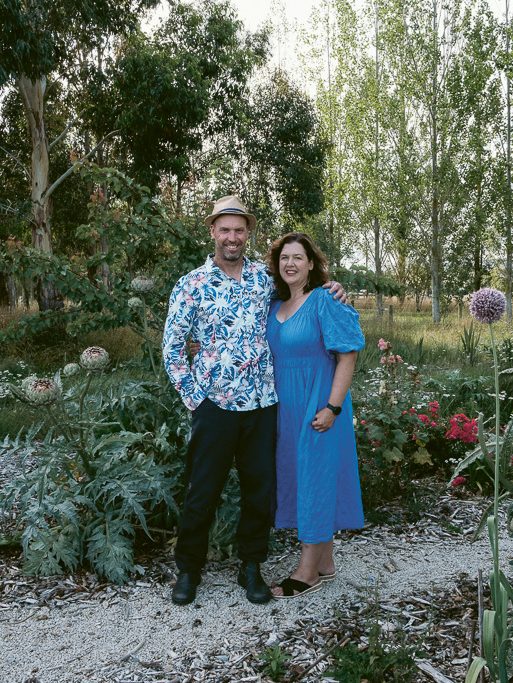
As our lives get faster, more overwhelming and less connected to the natural world, I think there’s a deep calling to move back to the ability to grow and cook our own food. It helps us feel centred, grounded and connected. It’s a basic human need,” says Angela Clifford, co-founder of The Food Farm, CEO of Eat New Zealand, and our unofficial queen of permaculture, or nature-inspired design.
Over the last 20 years, on a 16 acre block in North Canterbury, Angela and her husband Nick Gill have quietly built something extraordinary. Using permaculture principles of natural land management, they’ve turned that 16 acres into The Food Farm, a piece of earth that grows enough organic food to sustain themselves, their three children, a constant stream of volunteer workers (WWOOFERS), a menagerie of animals, extended family, and the community, when there is excess, which is often.
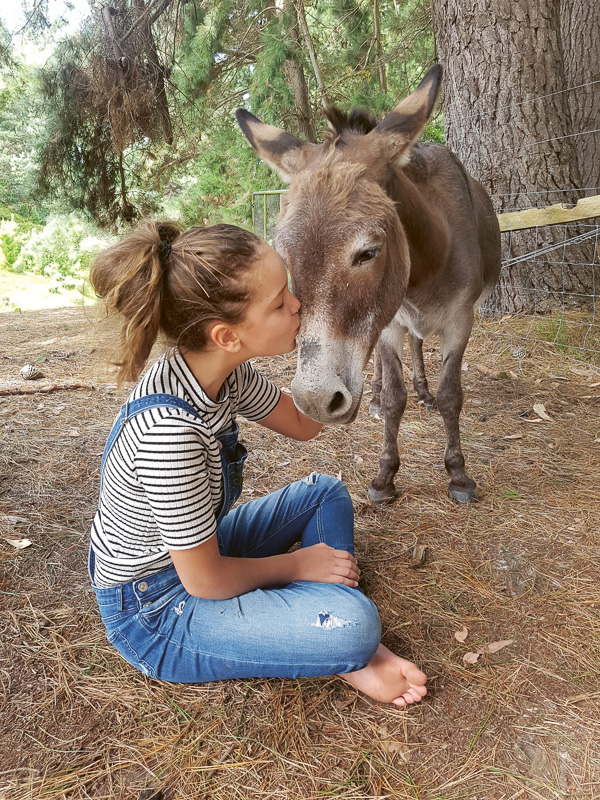
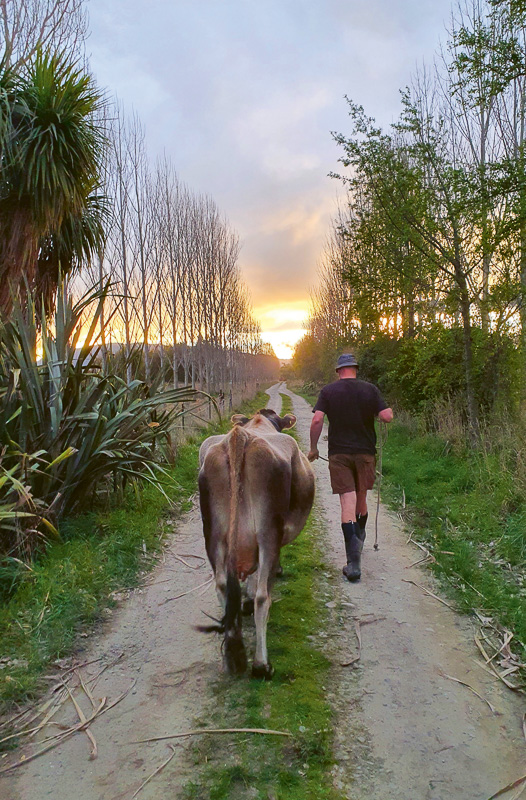
Being a regenerative, permaculture property means everything is grown organically. No chemicals, herbicides, fungicides, or insecticides. Animals are integrated into the system as functional collaborators, all playing roles in nutrient cycling, pest control, and ecosystem balance. The farm is home to Wiltshire sheep, Peking Ducks, Wessex Saddleback pigs, Indian game meat chickens, Barred Rock cross-laying hens, Jersey milking cows, and honeybees. The family also hunt, fish and forage for wild food.
Canine intervention
As so many things do, it all started with wine. For 15 years, Angela and Nick worked in the wine industry in Australia’s Barossa region, but when an opportunity came up for Nick to establish the Greystone Vineyard in North Canterbury, it was a fork-in-the-road moment for the couple and their baby daughter Ruby. Should they stay or should they go?
The decision was handed over to Nick’s old sheepdog, K9. They put two pieces of sausage equidistant from him. If K9 chose the piece of meat on the left, they’d pack up their life and move to Canterbury, which was Angela’s home. If he chose the other piece of meat, they would stay in Australia.
Fate, K9, the universe, or providence decreed a Canterbury move. The couple bought a few empty paddocks on Mount Brown Road and Nick started planting vineyards at Greystone. That was August 2005.
While it started out as a family home, over the years, The Food Farm has evolved into a teaching farm. Workshops, pop-ups, and events now form the core of Angela and Nick’s offering. They teach how to compost, how to propagate, how to plan a garden by seasons, preserving, pruning, soil health, sourdough making, and much more.
“Our mission is teaching others how to grow their own food and cook from scratch,” Angela says. “We also consult, helping people develop their own food farm.”
The latest evolution of this mission is the release of their first book, aptly titled The Food Farm. A 300-page distillation, says Angela, of the last 20 years.
“When I was approached by our publishers, Bateman Books, I was like, ‘there is no way in my life that I have time to write a book’ but they were so gentle and so persistent. It turns out I could,” she says. “I wrote the words and my husband wrote the recipes. I told him, ‘Listen, we just need a few recipes’ and he’s like, ‘oh, okay, that sounds simple.’ Sixty-two foundational recipes later, I’m somehow still married to him!”
Bateman gave a deadline of 18 months for the first draft. “I frittered away about 14 of them, and then almost killed myself in the last four months to get it done,” Angela says.
Community-sufficiency
Angela’s conviction runs deep. As CEO of Eat New Zealand, a non-profit food collective, she is part of an effort to reshape how New Zealanders grow, eat, and value their food.
The kaupapa of Eat New Zealand is to shift food systems toward equity, diversity, and ecological health. She envisions more than isolated growers: she wants “community sufficiency,” as opposed to self sufficiency. “There’s more value in keeping our front gates open and working out what we can trade.”
She highlights inefficiencies in current food systems and challenges the widespread assumption that feeding the world demands large industrial farms, arguing that small regenerative farms, if networked and supported, could feed many more people than ‘Big Ag’ – or large-scale, corporate commercial farming – would have us believe, pointing out that their farm alone has fed more than 20 families.
“Globally, we waste 40% of all the food we produce… only 25% of the calories that are grown end up on our plate.”
So what drives her? Reconnection. She lives and breathes the importance of reconnection to land, to community, and to food.
“After experiencing the earthquakes in Ōtautahi and Kaikōura, I saw how communities pulled together around food and mutual support. When the manure hits the fan… it’s each other that gets us through. In chaotic times, community is the keystone of resilience.”
She speaks of a deeper biology, too: “There is a bacterium in the soil, called vaccae, that crosses the blood brain barrier and increases serotonin. It literally makes us happier to have our hands in the soil.
“We, as a species, need to live a seasonal life and acknowledge the changing of the seasons. It is a deep calling for people to step back into that space and understand when things are going to be in season and when they’re not, and that’s it’s okay when they’re not.”
Growing and cooking your own food, says Angela, is more than nourishing the body: it’s restoring a lost connection to place, seasonality, and shared identity. “It’s a reaffirmation that we are part of the natural world and that we can reconnect really simply, really cheaply, really easily, with that. Even if you don’t have a lot of money, cooking something you’ve grown is such a gift to yourself of love and of community.”
Angela’s top 5 tips for new food growers
- Start small “Put aside a piece of garden to grow herbs, or leafy greens you’d ordinarily buy. Starting too big can lead to burnout. A couple of containers or a few square metres is plenty to begin with.”
- Grow what you like to eat “It’s the perfect opportunity to grow food you know you love… like salad greens or strawberries. They’re easy, low-maintenance, and thrive in small spaces.”
- Think in succession “To keep your harvest going, plant a variety of things, and then two weeks later, start again. It gives you that rolling supply.”
- Don’t fear weeds, learn from them “Those weeds are actually medics for the soil… they’re continuing photosynthesis, keeping the system alive.”
- Let the soil lead Regenerative growing means listening to what the land needs. “When we started, we didn’t really think about what was happening under the ground. The soil is everything.”
The Food Farm by Angela Clifford and Nick Gill is on sale now at selected bookstores and online at batemanbooks.co.nz.