


Shooting for the stars: Canterbury’s aerospace industry
Is aerospace the key to our future prosperity? Metropol deputy editor Tamara Pitelen reports on plans to quadruple the value of our region’s aerospace industry in just 10 years while honouring the values of sustainability and diversity.
Is the future prosperity of Canterbury found in the stars? Leaders in the region’s aerospace sector believe so. With bold ambition, the Canterbury Aerospace Leadership Group (CALG) has unveiled a strategy to make Waitaha Canterbury a globally recognised centre for aerospace innovation – one that tackles major global challenges like climate change, biodiversity loss, and inequality.
Launched in June at the Air Force Museum of New Zealand in Wigram, the Waitaha Canterbury Aerospace Strategy brings together a powerful coalition of local government, academia, industry, and iwi. Key partners include ChristchurchNZ, Aerospace New Zealand, Tāwhaki National Aerospace Centre, the University of Canterbury, and Christchurch International Airport.
The strategy sets out ambitious goals: growing the region’s aerospace economy to over $1 billion annually by 2035, the workforce to 1500 high-value jobs, and reaching 50% carbon neutrality across the sector. It’s not just about economics. The strategy champions diversity and inclusion, aiming for half the workforce to be women, Māori or Pasifika, with at least 20% Māori or Pasifika representation.
“This is a uniting document that reflects the extraordinary potential of our region,” said Ali Adams, CEO of ChristchurchNZ and Chair of CALG. “It showcases how Canterbury can lead the way in solving global challenges through aerospace, while creating jobs and driving innovation.”
IT IS ROCKET SCIENCE
Speaking at the release of the strategy, Kea Aerospace founder Mark Rocket – and the first New Zealander to go to space – says “This strategy positions our region not just as a participant in the global aerospace sector, but as a leader, a place where rockets are tested, satellites are imagined, and the next generation of thinkers, makers and explorers are inspired. This strategy is a product of deep collaboration between industry, academia, local government and our communities, and this collaboration is a key part of what makes Canterbury special. The strategy reflects the values that define us, kaitiakitanga, innovation and partnership.”
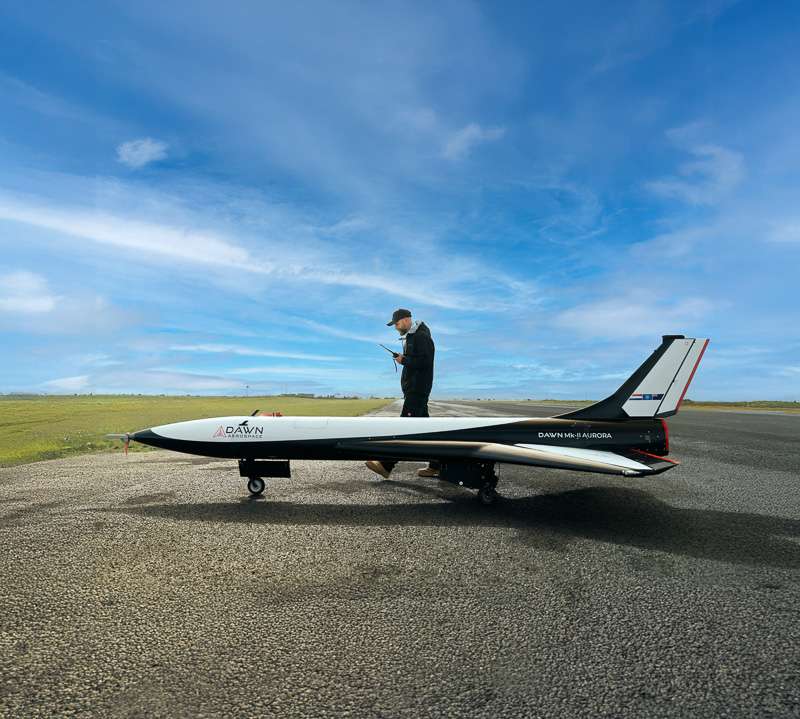
Aerospace is already transforming Canterbury into a hub of activity – from satellite innovation and sustainable propulsion systems to advanced climate monitoring tools. Companies like Kea Aerospace and Dawn Aerospace are at the forefront, and partnerships with global players like NASA are cementing Canterbury’s growing reputation. Dawn Aerospace recently signed a landmark partnership with the Oklahoma Space Industry Development Authority, and Kea Aerospace was selected by NASA and New Zealand Assessment Panel to deliver a project focused on developing the next generation of environmental monitoring tools.
“We’re building a sector that is sustainable,” says Mark. “One that doesn’t just reduce emissions but uses aerospace data to help us adapt to climate change, manage our resources and protect our whenua. We’re building a sector that is globally connected with our clear skies, our regulatory agility and our collaborative spirit.”
AEROSPACE TECHNOLOGIES
Judith Collins, New Zealand’s Minister for Space and Defence, announced key regulatory support to accelerate growth in the sector. This includes the Civil Aviation Authority’s recent designation of permanent special-use airspace at Tāwhaki National Aerospace Centre, located at Kaitorete Spit on Banks Peninsula – making it easier to test next-generation aerospace technologies.
“Part of what we needed to do was to designate permanent special-use airspace at the Tāwhaki National Aerospace Centre,” says Minister Collins. “I’m delighted to announce that Civil Aviation Authority has now granted that designation. This is going to make it easier for operators looking to utilise Tāwhaki for testing.
“It’s a first step in our journey to affording more freedom for innovators to safely refine next-generation technologies, along with the proposed new innovative rules. These changes are designed to support rapid iteration, reduce regulatory friction and ensure safety while enabling innovation. Plus the Civil Aviation Authority and the Ministry of Transport are currently consulting on proposed changes to the Civil Aviation rules to make it easier to test and deploy new space and advanced aviation technologies, including uncrewed aircraft, type altitude platforms and experimental systems. I want
us to be the place people come to experiment and stay.”
As stated in the Waitaha Canterbury Aerospace Strategy: “By 2035, we are confident that aerospace will be a cornerstone of Canterbury’s prosperity, driving growth and raising the region’s global reputation for the benefit of all.” The sky is no longer the limit for Canterbury. It’s the launchpad.
To download a copy of the Waitaha Canterbury Aerospace Strategy: christchurchnz.com/about/news/canterbury-launches-ambitious-aerospace-strategy