
Face it, it’s light work
LED face masks tend to sit in one of two camps: serious, science-backed skincare tools, or something that looks like it escaped from a sci-fi costume department. Metropol’s gadget guy Ian Knott discovers the Nanoleaf LED Facemask feels reassuringly grounded, even if wearing it gets a sideways glance from anyone else in the room, especially the dog.
LED light therapy, more formally known as photobiomodulation, works on the idea that specific wavelengths of light can penetrate the skin at different depths. When those wavelengths reach skin cells, particularly the mitochondria, they are thought to help stimulate cellular activity and energy production.
In practical terms, that can translate into improved cell repair, reduced inflammation, and increased collagen production, depending on the wavelength used. This is not new science. Variations of LED therapy have been used in dermatology and medical settings for years, including wound healing and post-procedure recovery.
Home devices like the Nanoleaf LED Facemask operate at lower intensities than clinical equipment, which is why results tend to be gradual rather than dramatic. The science supports the concept, but consistency and realistic expectations are key.
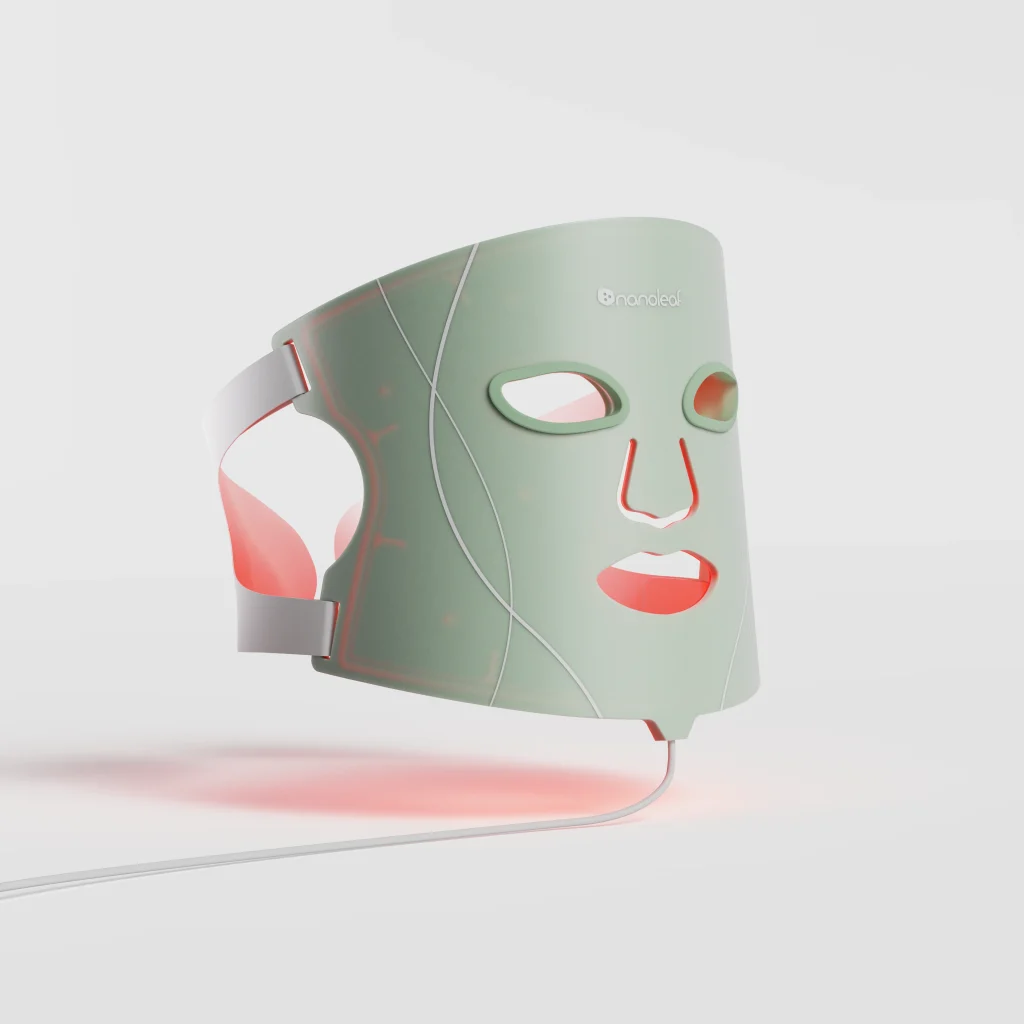
Nanoleaf, best known for its ambient and architectural lighting, has taken a fairly logical step here. Instead of lighting rooms, it is applying the same LED expertise to a much smaller, more personal space. Your face.
One of the mask’s biggest strengths is just how straightforward it is. It is USB rechargeable, completely self-contained, and has no app dependency or setup ritual. You strap it on, select a light colour, set the time and intensity, and you are done. There is no real learning curve to speak of.
You can adjust both session length and light strength, which matters because home LED masks operate at lower power than professional clinic systems. The trade-off is consistency and time rather than brute force.
The only real negative is the LCD screen on the controller. It does the job, but it is very small and can be hard to read, particularly in low light. It works, but it is not especially user-friendly.
Nanoleaf has clearly paid attention to wearability. The mask is made from soft rubber, sits comfortably on the face, and feels well balanced rather than front-heavy. It is also adjustable, so it fits securely without feeling tight or awkward.
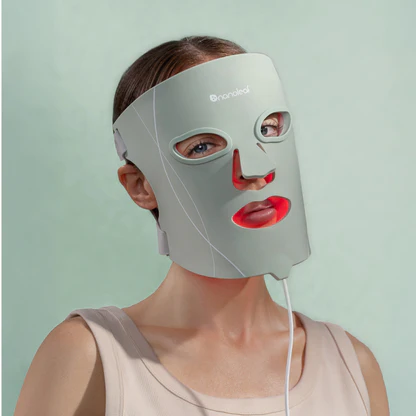
I mostly used it in bed, reading (or more to the point, doom-scrolling) while it was running. If it was uncomfortable or annoying, that habit would not have lasted long.
I used the mask daily for six weeks, following a consistent routine of 10 minutes of red light followed by 10 minutes of green light each evening.
Red light is commonly used to support collagen production and skin elasticity, and is often associated with reducing the appearance of fine lines over time. Green light is typically aimed at evening out skin tone, helping with pigmentation and general redness.
I deliberately did not introduce any new skincare products alongside it. No serums, no acids, no sudden interest in a multi-step routine. My usual approach is water, and occasionally moisturiser. That was intentional, as I wanted to avoid any false representation of results. I am also well aware of the power of placebo and expectation, so I approached this cautiously rather than optimistically.
Beyond red and green, the Nanoleaf mask offers several other colours, each targeting different skin concerns:
- Blue light is commonly used to target acne-causing bacteria and help reduce breakouts
- Yellow light is often associated with calming sensitive skin and reducing redness
- Cyan light is typically used to soothe irritation and support overall skin balance
- Purple light combines elements of red and blue light and is generally aimed at overall skin maintenance
- As with most LED therapy, no single colour is a magic fix, and results vary from person to person
After six weeks, the changes were modest but noticeable. My skin tone appeared a little more even and slightly healthier overall. Nothing dramatic, and nothing that would fuel a breathless before-and-after slideshow, but a genuine improvement.
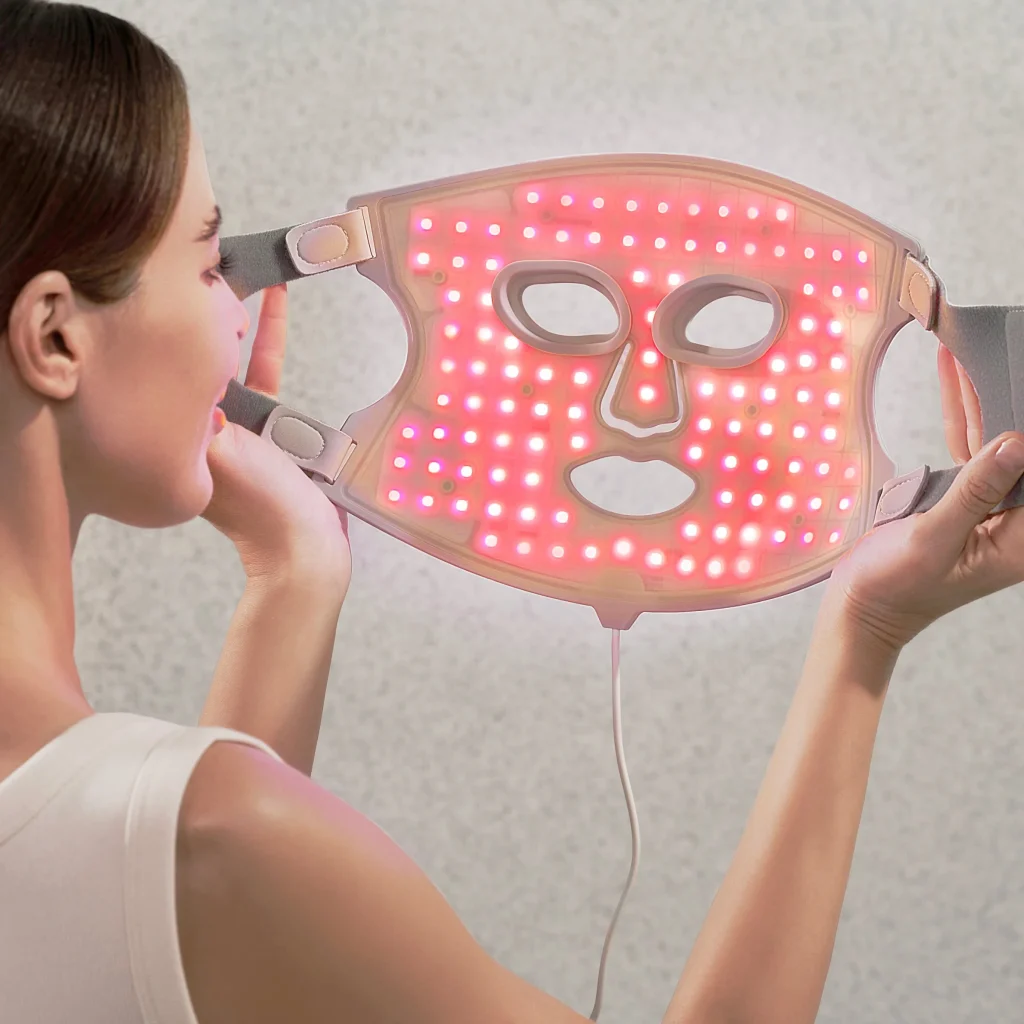
The LEDs are bright, but clearly lower powered than professional clinic systems. The upside is the ability to use the mask regularly, for longer sessions, in your own time.
The Nanoleaf LED Facemask comes in at around $240, depending on retailer. On its own, that sounds steep. Compared to professional LED treatments that can cost hundreds per session, it quickly starts to look cost effective, particularly if you plan to use it consistently.
This is not a miracle device, and it does not pretend to be. What it offers is a comfortable, easy-to-use way to access LED light therapy at home, with gradual and believable results over time and with consistency.
If you want clinic-level intensity, you still need a clinic. If you want something you can use at home, in bed, while reading a book or watching TV, the Nanoleaf LED Facemask does exactly what it claims, quietly and without fuss.