
A hilltop haven
When Marion McKellow first drove up the secluded driveway of Pine Hill House near Cust, it was bleak midwinter.
Words: Pattie Pegler | Images: Supplied
The skies were grey and the garden was bare. But Marion instantly loved the peace and quiet, it was just the haven she was looking for – away from the city and the tumult of life after the earthquakes.
“I think I made my decision before I even stepped inside the house,” she recalls of her first visit.
It might have been a quick decision, but it was clearly the right one – Marion has lived in this historic home for 12 years. She says it will be difficult to leave this place behind.
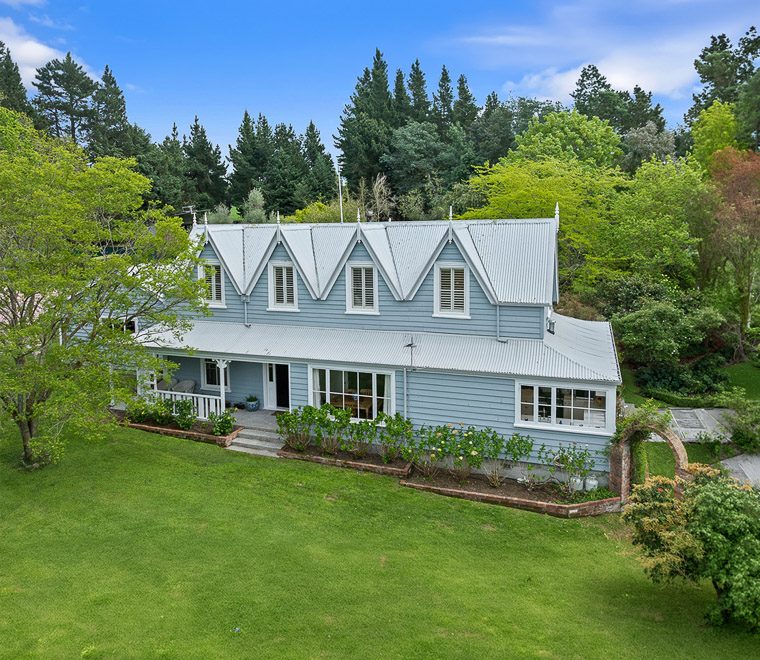
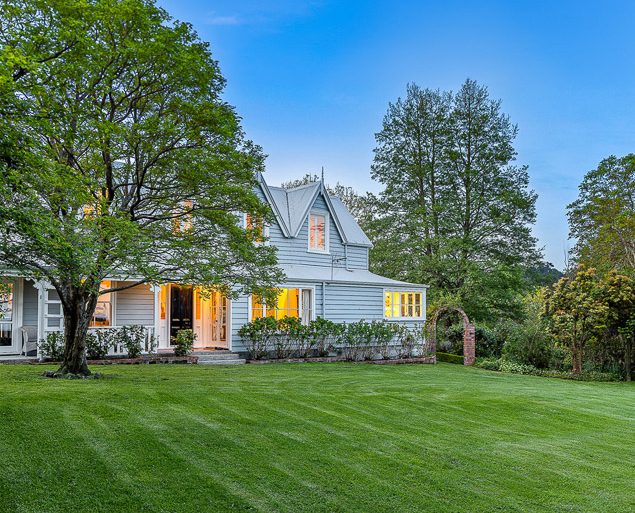
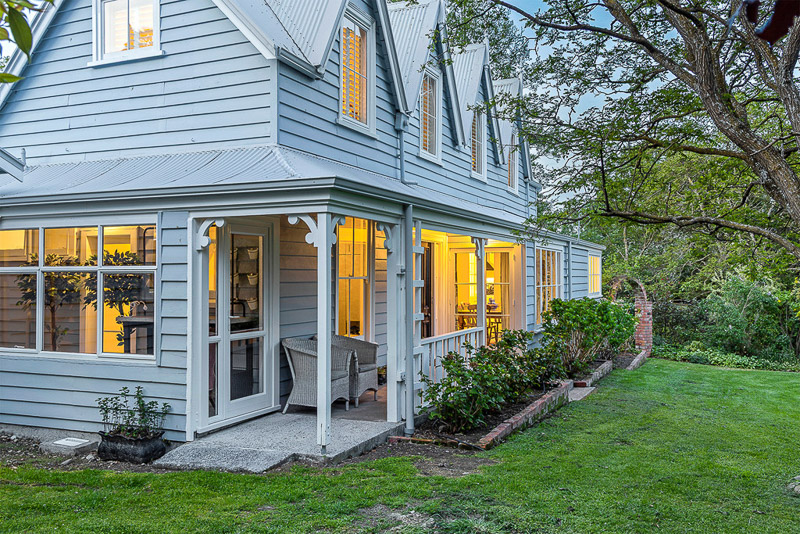
It’s not hard to see why. The two-storey weatherboard house, built around 1876 is full of character and charm – one side surrounded by lush garden greenery, the other looking out across the hills and rolling paddocks of North Canterbury. It feels both secluded and part of a greater whole.
Inside elegance
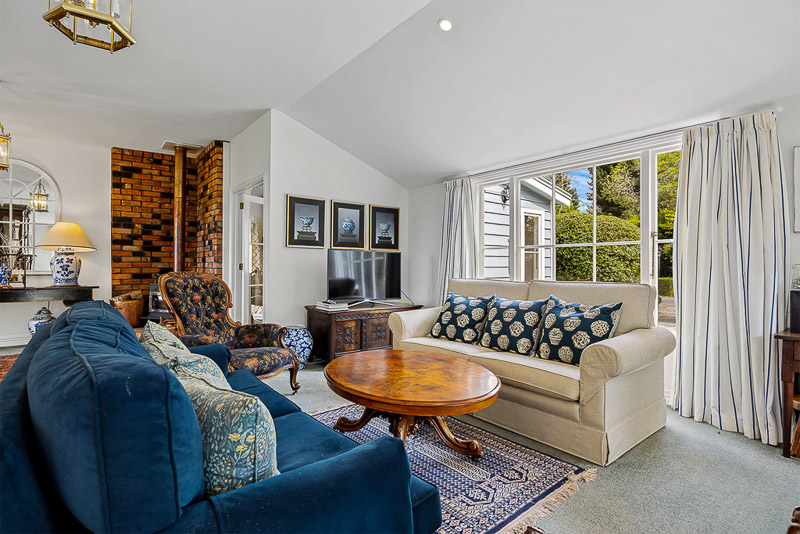
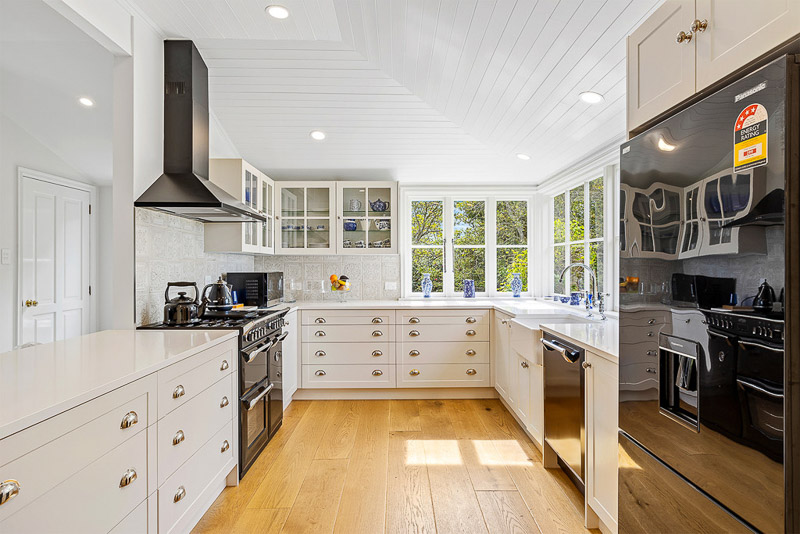
With a strong background in design and a skilled eye for the aesthetic, Marion created a warm and welcoming space in these historic walls. Inside, an open plan kitchen, living and dining area feel spacious and carefully demarcated into their own areas.
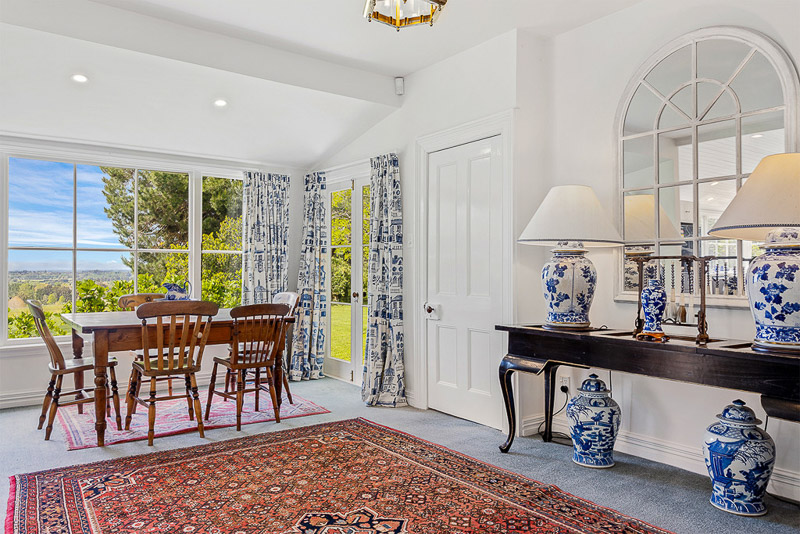
Classic cream and navy striped curtains and blinds in the living area; heavily patterned curtains, covered with Dutch style houses, in the dining area. Blue crockery stands out against white colonial style cabinetry in the recently renovated kitchen. A window by the dining table frames a view of blue skies and rolling hills with a border of bushy blue hydrangeas peeking up along the windowsill. There’s a formal element alongside a homely feel, there are stripes and patterns and textures. But it all works.
“It’s often about picking out colours,” explains Marion. “The blues tie it together here.”
She opens the drawer in the old farmhouse style dining table to reveal a blue patchwork tablecloth. She spotted it just over 12 years ago in a shop in Christchurch, at the time she had already made an offer on this home and was waiting to see if it would be accepted. “I saw this tablecloth and thought, ‘I’m going to buy it. I’m going to be really positive’.” Later that day she heard that her offer had been accepted and the house was hers.
Antiques and the Orient
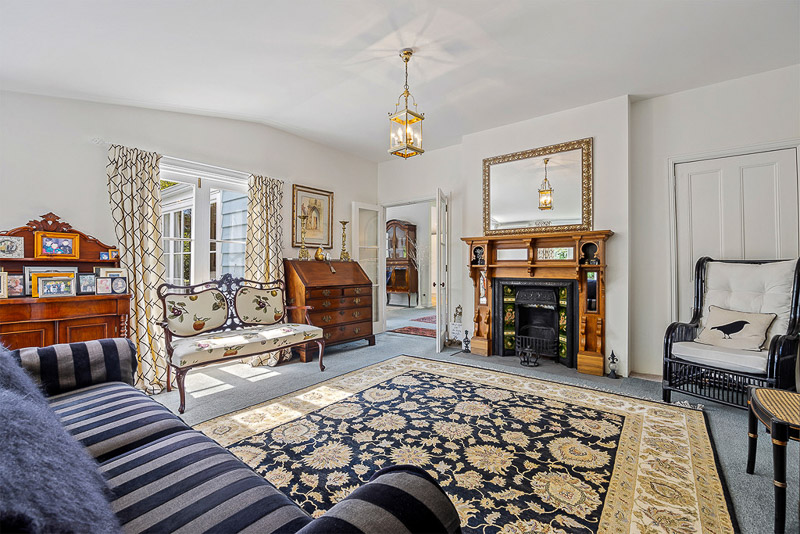
Having run her own business for many years in the design and retail sector, Marion travelled frequently to Hong Kong. It was during these visits that she developed a love for the Oriental aesthetic. Step into the lounge area of her home and a large, dark, lacquered sideboard catches the eye. On top of it a beautiful collection of Chinese writing brushes, which use different sizes and styles of feathers to create ink strokes; they’re commonly used in calligraphy. Marion bought these on one of her trips to Hong Kong at an art supplies shop away from the touristy parts of the city.
“I was explaining to the shopkeeper what I was looking for,” says Marion. “And there were some ladies waiting behind me. They wanted to know what I wanted the brushes for, the shopkeeper told them I wanted them to display, as ornaments. They thought it was really funny, they were all laughing.”
Over the years Marion has also ensured the heritage of this home is honoured. A period fireplace was sought out and restored before being installed in the lounge area. There are period light fittings and plenty of solid and beautiful antique pieces – like the Georgian walnut writing desk in the lounge. It is a perfect blend of the old and familiar and the more far-flung.
“Classic with an Oriental bent,” says Marion when asked to describe her taste in interiors.
Back to nature
This is a beautiful and welcoming home but the surroundings really make it. So it’s no surprise to hear that one of Marion’s favourite spots around the house is outside.
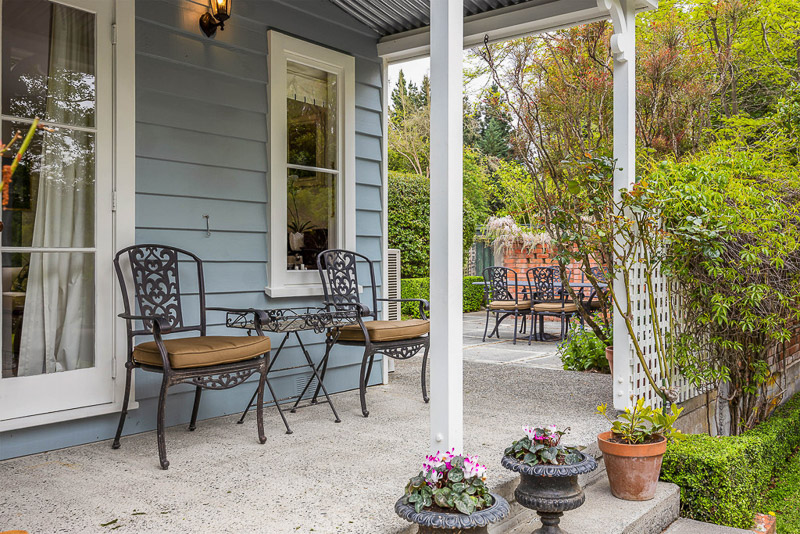
“It’s the verandah,” she says. “This is where I like to sit with a cup of tea and look at the trees and garden.”
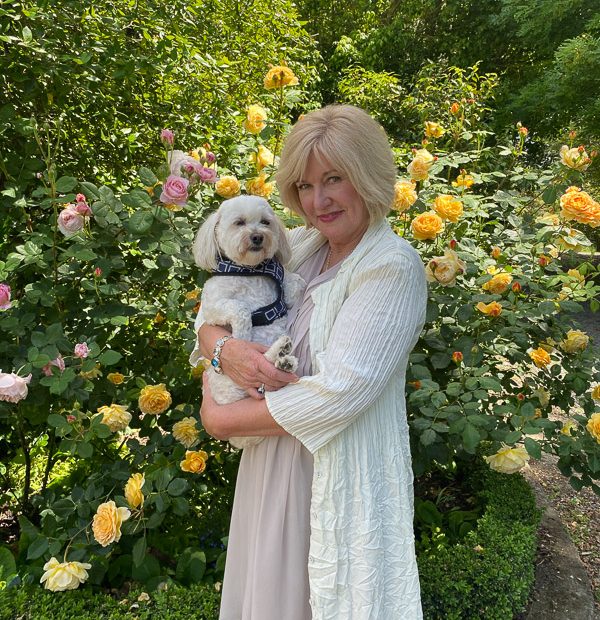
A keen gardener, Marion also enjoys the wildlife in this secluded spot. Fantails flit around and magpies sit in the taller trees. Now and again a pheasant struts past before disappearing into the undergrowth, a brief ripple in the tranquillity of this hilltop haven.
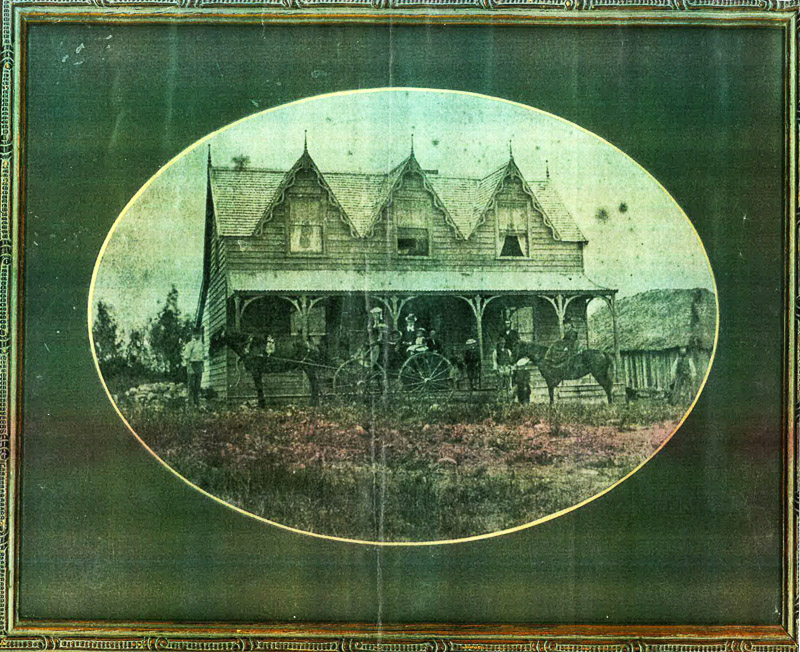
is registered with Heritage
New Zealand as a category
2 listing
Rewinding time
This historic hillside home is registered with Heritage New Zealand as a category 2 listing. The colonial style farmhouse represents the early rural development around the town of Cust.
It is thought the house itself, Pine Hill House as it was known, was built around 1876 and the farmland where it is located was transferred to Archibald Wotherspoon, earlier that year. Wotherspoon was a sheep breeder from Scotland, who arrived in New Zealand in 1875. The property was transferred to his son Archibald James Thomson Wotherspoon in 1905.
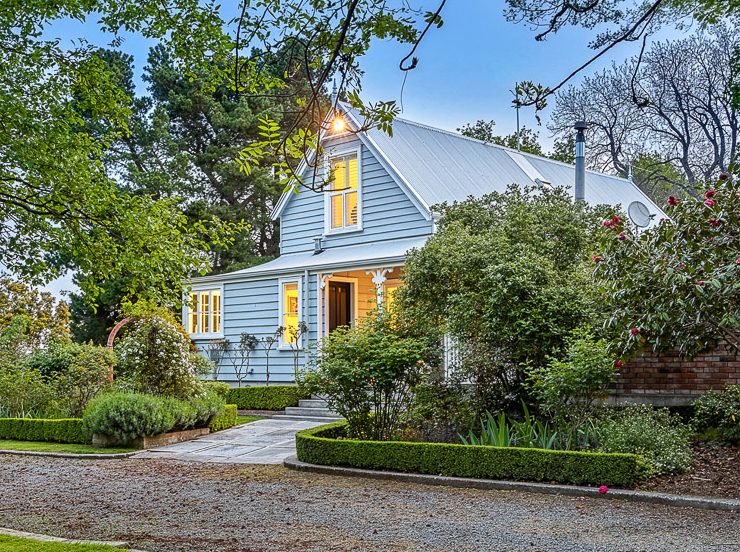
In 1938, after passing through various owners, the property was bought by Ian Cummings Graham of Cust. Graham started calling it Inchtalla after an island in the lake of Menteith, Central Scotland, where his ancestors came from. Over the years the property has been bought and sold but always remained a private residence.
The house was originally built with weatherboard, a gabled iron roof and three gabled dormer windows upstairs. A fourth dormer was added later when the house underwent other extensions. The house has been enlarged in stages, with a lean-to added to the rear some time before 1990 and a major extension undertaken between 1990 and 1992. In 2011 a garage was added to the south west side of the house. Other modifications have included the closing in of part of the verandah.
Regardless of these changes, the character of the farmhouse and its surroundings remains.