

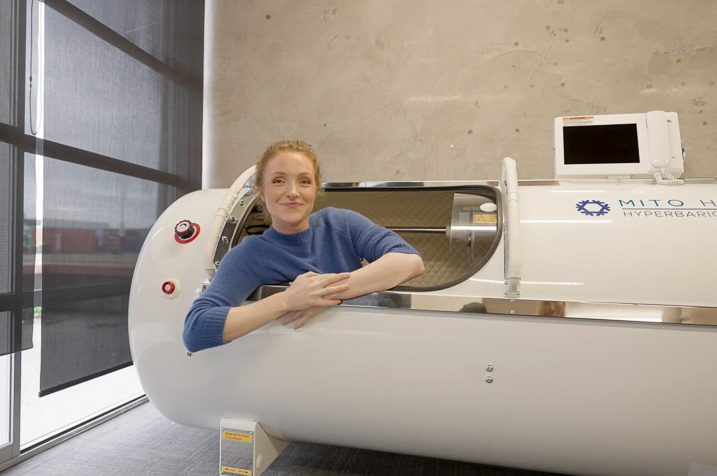
Under pressure: Hyperbaric Oxygen Therapy
Can hyperbaric therapy help with everything from ageing to anxiety, diabetes, erectile dysfunction and migraines? Metropol deputy editor Tamara Pitelen dons an oxygen mask and gets sealed in a hyperbaric chamber to find out more about this increasingly popular therapy.
For about 12 years now, my husband has suffered debilitating, excruciating and regular migraines.
Until the age of 48, he’d never had one. That changed overnight. His first migraine came at the end of a particularly stressful, eight-hour taxi ride in India. Since then, he’s had them regularly. Often weekly. They’ve been so bad at times that he genuinely wanted to die. Over the years, we have tried more therapies and healing protocols than I can remember, from the scientific (neurologists, MRI scans and pharmaceuticals) to the spiritual (shamanic healing) and everything in between – acupuncture, medicinal cannabis, kinesiology, cranio-sacral, spinal energetics, dieticians, massage therapy… and many more. While there have been improvements and some relief, nothing has so far cured him.
What we hadn’t tried was hyperbaric oxygen therapy. ‘Worth a go,’ thought him indoors. What was there to lose? Nothing apart from $1800 for 20 sessions. So, for four weeks, from Monday to Friday, he put on an oxygen mask and sat in a hyperbaric chamber for 90 minutes. On one of those sessions, I joined him out of curiosity. The rumoured-yet-unproven anti-ageing benefits were also an incentive, if I’m honest.
Just breathe
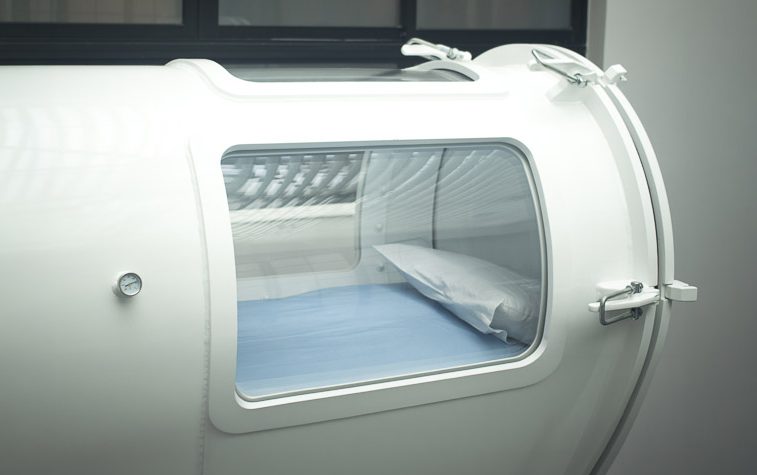
What is hyperbaric oxygen therapy (HBOT)? In brief, it involves sitting or lying inside a pressurised chamber while breathing high levels of oxygen. Under increased atmospheric pressure, oxygen dissolves more readily into the blood plasma.
The intent is to increase the amount of oxygen your body can deliver to tissues that are damaged, inflamed or receiving a poor blood supply. This increased oxygen availability supports the body’s natural repair processes, including cellular metabolism, collagen production, and the formation of new blood vessels, known as angiogenesis.
Originally developed to treat conditions such as decompression sickness, carbon monoxide poisoning, and difficult-to-heal wounds, HBOT is now being investigated for its broader effects on human health and performance. We went along to one of the several hyperbaric therapy centres in Christchurch for a couple’s session in one of the spacious two-person chambers. We wore regular clothes but took off our shoes. It felt a little like getting into a luxury taxi. There was a television on the wall opposite two armchairs. We put on our oxygen masks and our therapist closed the door to begin the process of pressurising the chamber. Not unlike being in an aeroplane, you need to ‘pop’ your ears until the pressure level is reached. It’s the same at the end of the session when the chamber is decompressed. For most of the 90 minutes, we watched Netflix. Throughout the session, you find yourself needing to breathe really deeply numerous times. By the end of it, I felt good and more energised, but advocates of the therapy say that for real results, you need regular sessions over a prolonged period. Many people choose to hire or even buy their own pods for home use.
Something in the air
Professional athletes and sportspeople often use HBOT (including the Crusaders, according to our sources) because it is believed it may help speed recovery, reduce downtime after injuries, and help them return to training sooner. Evidence though, is mixed. Studies have not consistently shown meaningful benefits.
At time of writing, my other half has done 17 sessions over three and a half weeks. He says his joints feel “less achy” and while it hasn’t stopped his headaches so far, the severity and frequency have reduced. As well, if he goes into the chamber with a headache, it has usually gone by the end of the session. Is this a permanent benefit? That remains to be seen.
The reality is that no one really knows if HBOT can help migraines either as a long-term treatment or cure. At present, the evidence is too limited and inconsistent. My husband, though, is on his own one-man study. After the 20 sessions, he’s giving HBOT a break for a month, but then plans to hire one of the chambers and keep it in our spare room for six weeks for at-home daily sessions.
In summary, the jury is still out on HBOT. As research continues to evolve, it represents an intriguing intersection of science and regenerative health, demonstrating how something as fundamental as oxygen can play a role in supporting the body’s capacity to heal.
This article is based on independent and personal experience. Tamara Pitelen paid for all services herself; the content is not sponsored or influenced by any third party.
LIP ENHANCEMENT
When hydration and care aren’t enough to restore lost volume or definition, subtle cosmetic lip enhancement by a qualified cosmetic medicine doctor is an option – today’s approach favours soft, natural-looking results over the overfilled look of years past, with tiny amounts placed to complement the lips you already have.