Written on stone: Māori Rock Art
by Metropol | September 2, 2026 8:33 am
Ancient drawings, fragile landscapes and a 20-year labour of love: farmer and author Philippa F. Graham’s new book South Island Māori Rock Art explores the remarkable history and enduring mystery of Māori rock art in the South Island.
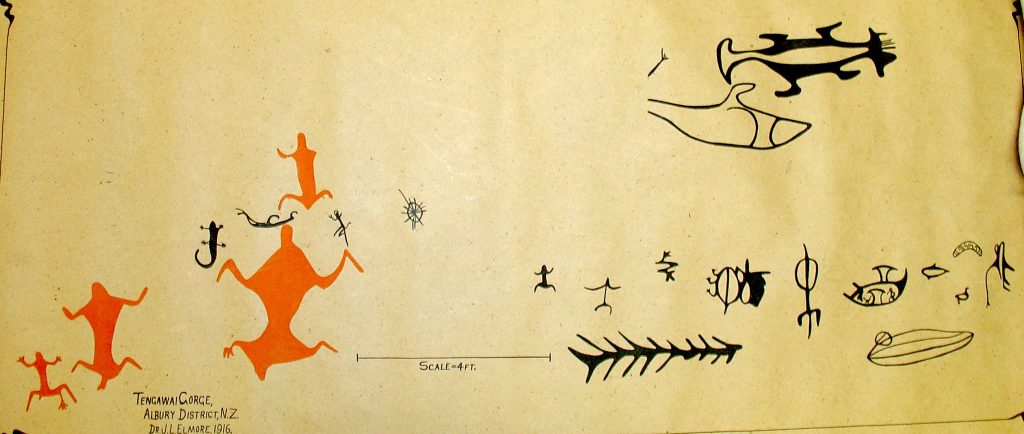
In 1916, American anthropologist and antiquarian James Lee Elmore arrived in New Zealand to study Māori rock art. It was at a time when museums around the world were enthusiastic collectors of indigenous artefacts. Elmore offered to cut the precious rock drawings from their limestone surfaces. He traced and numbered them, then asked museum curators which ones they wanted to buy. Around 36 pieces were eventually removed.
Some fragments of Elmore’s efforts remain in the Otago Museum. A particularly large piece went to the Auckland Museum, although its subsequent disappearance is the stuff of museum folklore, apparently, it may have found its way into a geology department by mistake.
This is just one of the many threats to the conservation and preservation of South Island Māori rock art. Other threats include amateur efforts at restoration, like the drawings at Weka Pass ‘restored’ with house paint. Other drawings have disappeared beneath the rubbing of itchy cattle. More have been damaged by quarrying, vandalism or neglect. The landscapes that had protected the art for centuries could also put it at risk once farming, industry and collecting entered the picture.
While Elmore’s deeds seem egregious now, it at least brought the value of the rock drawings to the attention of local people who lived near the drawings and the Māori Antiquities Act was invoked to prevent Elmore from removing any more drawings from the country. Too little, too late.
School of rock
This chequered history of South Island Māori Rock Art has been documented in an extraordinary new book by Phillippa Flower Graham, a Christchurch-born writer and retired farmer who lived all her married life in South Canterbury, near Māori rock art sites.
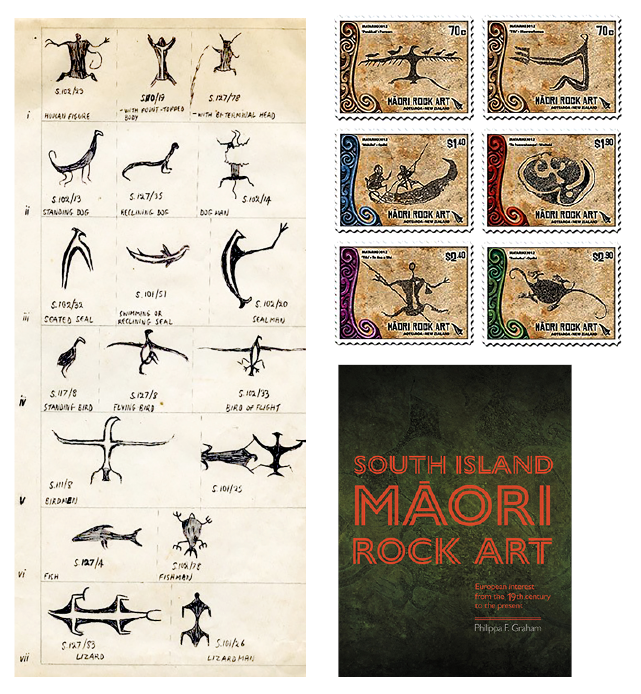
The book is the result of 20 years’ worth of research, and at around 330 pages, it is the most comprehensive survey of Māori rock art ever published. Richly illustrated, it documents the history of Māori rock art in Aotearoa, from its earliest European recorders to its protection, preservation and influence on contemporary art.
As well as in-depth research, it includes two poems by Canterbury poet and writer Rangi Faith (Kāi Tahu), 350 photographs and drawings, and an extraordinary collection of historical material. What it doesn’t contain is an attempt to explain to readers what the drawings mean. “There’s no attempt at interpretation,” Phillipa says. “That’s for Māori to do.”
Instead, the book traces the stories around the drawings, who recorded them, who damaged them, who tried to preserve them and, increasingly, who is taking responsibility for
them today.
Philippa’s own connection began through exploring the South Canterbury countryside. She took her children out across farmland, looking for rock drawings and checking whether they had survived.
“I used to take the children, and we’d explore a lot of the farmland in Totara Valley, places like Craigmore, and then North Otago. I used to check that the drawings were still there, that they had not been rubbed away by stock or damaged.”
Her first encounter was at Gould’s farm, where the rock art had been surrounded by another kind of human mark: local initials painted in house paint. “There was a lot of graffiti then,” she recalls. “But that’s gone now. They’ve been restored.”
She describes how she felt when she first found rock art. “I saw drawings of dogs in the cave area around the back there, a little dog up on the hillside, and I was quite thrilled. And then I looked for some more drawings, which were fortunately recorded, but they had all disappeared from cattle rub. It made me realise that these drawings were a bit precarious.”
Being struck by the vulnerability of the rock drawings spurred Philippa into action. She became involved with the Historic Places Trust, receiving material from earlier enthusiasts and researchers. Later, she worked with Lands and Survey, Roger Gould and others to help protect rock-art sites in South Canterbury. Fencing became an important tool, allowing farmers to continue working their land while protecting the drawings from stock.
Increasingly, Māori involvement has become central. For Philippa, that shift is important. She is conscious that the rock art reflects the histories of different Māori groups who lived in and travelled through the South Island, including Waitaha, Ngāi Tahu and Ngāti Mamoe.
She is also wary of reducing the drawings to a single explanation. Some may depict animals, fish or creatures that people observed or hunted. Others are beautifully abstract. A 90-metre-long drawing at Palm Hills called the Waitohi composition particularly fascinates her, with fish, crayfish and figures stretching across the rock. “It might be a map,” she says. “I really don’t know.”
Standing in front of a rock drawing can feel like encountering an individual across centuries. “I was fully aware of the fact that a lot of the drawings were the result of the Waitaha people, who were a peaceful people,” she says.
Contemporary art influence
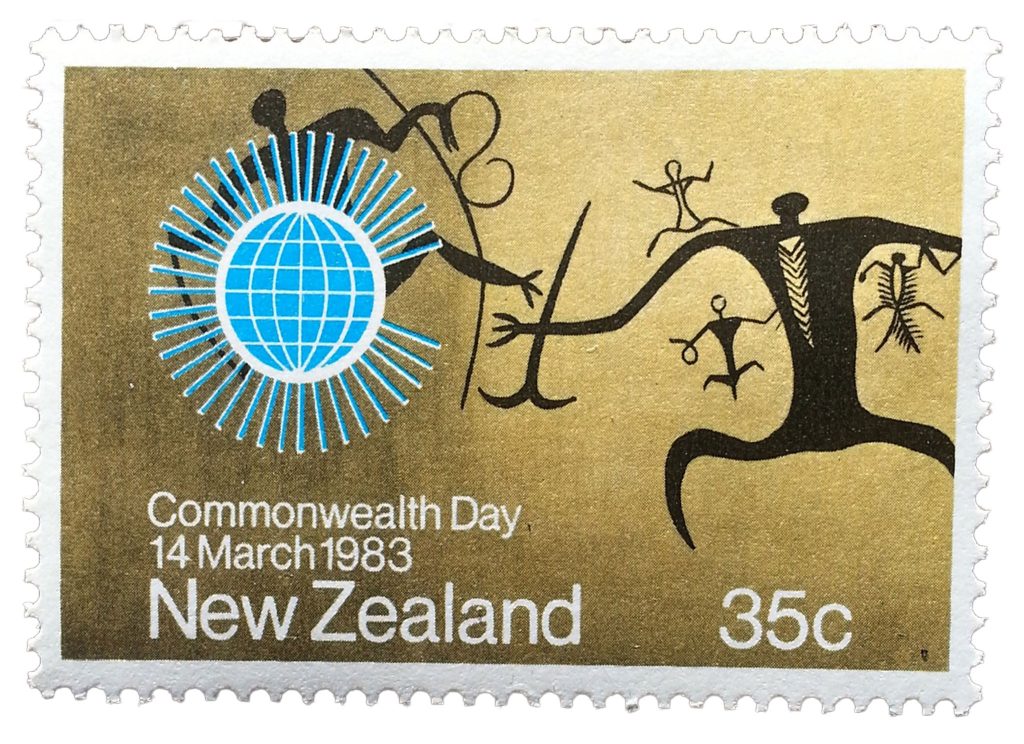
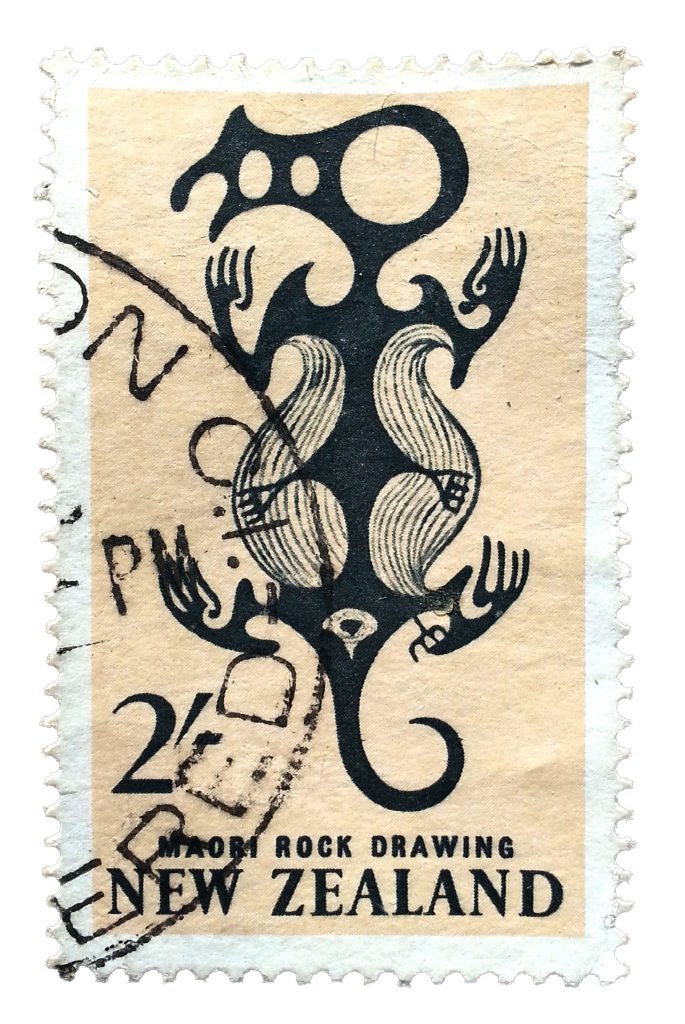
Fascination with these mysterious drawings extends into contemporary art. Māori artists have used rock-art motifs in their work, while artists such as Ross Hemera have transformed them into new forms. Philippa points to a striking sculpture based on Māori rock-drawing motifs near the entrance to the Mackenzie Country as an example of how imagery can travel from ancient rock surfaces into modern artistic expression.
The future, she believes, is about protection without cutting these places off from people. Some sites are already being fenced and cared for. At Goulds Gully, where famous taniwha drawings are found, local rūnanga have, she says, transformed the surrounding landscape with planting, replacing the thistles that once crowded the site. Elsewhere, interpretation and displays are helping introduce visitors to the art without compromising the sites themselves.
Philippa believes better signage and explanation would help, particularly where drawings have faded and are difficult for visitors to see. After two decades of research, she says the publication of the book feels a little surreal. It is also, she says, a different kind of history: one that brings together art, farming, conservation, collecting, museums, Māori history and contemporary culture.
It gathers material that had previously been scattered across archives, photographs, drawings and memories and puts it in one place.
The result is not a book that claims to solve the mystery of Māori rock art. Instead, it invites readers to really look and to consider what it means that these images have survived at all. Marks made by people long ago that continue to speak.
South Island Māori Rock Art by Phillippa F. Graham is published by Canterbury Museum. RRP 89.99
Source URL: https://metropol.co.nz/written-on-stone/