Metropol’s review of Fatherland at Lumière Cinemas!
by Metropol | November 23, 2026 10:31 am
Fatherland belongs on the big screen: Metropol reviews at Lumière Cinemas
Thomas Mann does a fair bit of talking in Fatherland. He can stand in front of a roomful of strangers and find the words for what it means to be German. Yet put him in a car beside his daughter Erika, and the few words she needs from him seem beyond his reach.
It’s 1949. After 16 years in exile, the German novelist has come home to accept an award in Frankfurt, where Goethe was born. He intends to accept another in Weimar, where the poet lived. To Mann, it makes sense to go to both. Which half of Germany could claim Goethe for itself?
Frankfurt is under American influence, Weimar under Soviet control. We know where those two roads lead. For the people Mann meets, that future is still taking shape. Both sides want the standing his visit brings. He still hopes he can speak to them as one people.
At a press conference, a journalist challenges Mann about leaving Germany during the Nazi years. His answer is simple. Had he stayed, he wouldn’t have survived. What gives the exchange its edge is that he’s saying this to people who did stay. You’re left to consider what it took for each of them to get through those years.
Erika is at the wheel of their black Buick, worried about her brother Klaus while getting her father to his next engagement. At a reception she runs into her former husband, an actor who did rather well under the Nazis. Watch Sandra Hüller’s face when he presumes they can still be on friendly terms. There’s a whole marriage in that look.
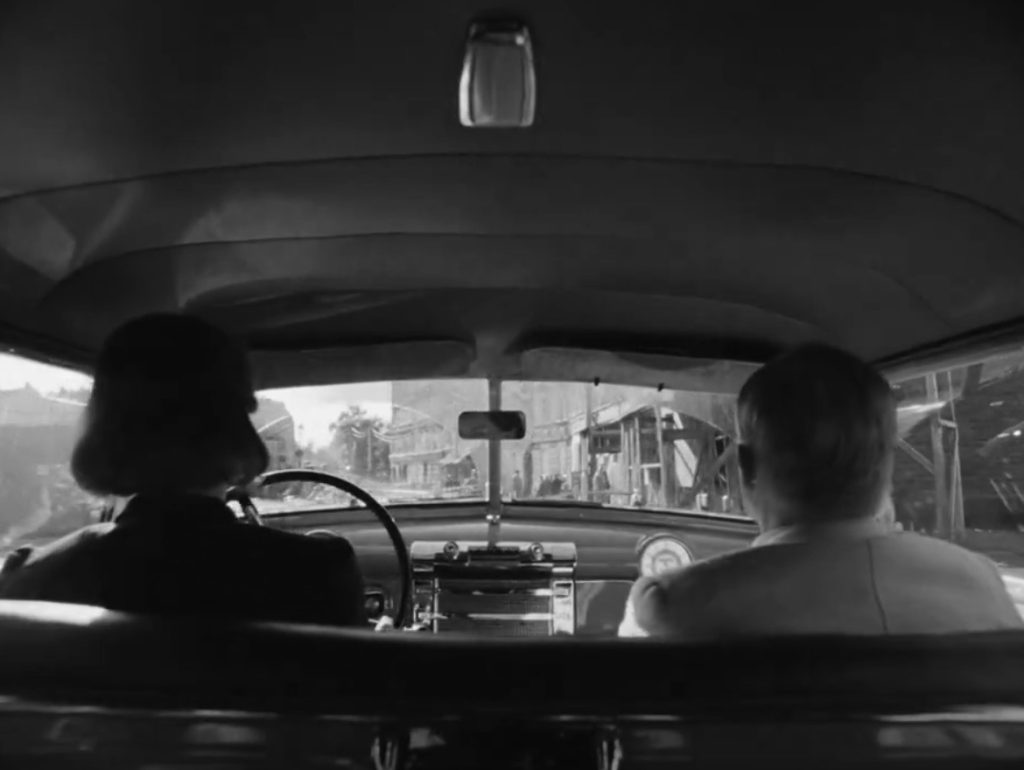
Hanns Zischler gives Mann real dignity. I get the sense that, for Mann, a father’s job when things get difficult is to hold himself together and carry on. You can see why the people who’ve come to hear him speak might take comfort in that. For Erika, though, it must be lonely to have her dad sitting right beside her and still feel she can’t talk to him about her brother.
Paweł Pawlikowski chose to shoot the whole film in black and white. You see what that choice does early on, when a motorcyclist leads the Buick through the ruins of Frankfurt. The grain gives the street the look of an old newsreel. For a moment you feel you’re seeing the Germany Mann came home to, right down to the faces of the people who stayed. Later, at the reception, it’s those faces your eye goes to. Even while Mann is speaking, I found myself watching the people listening.
Pawlikowski says his team spent five months finding extras. I can believe it. I couldn’t spot one extra with nothing to do, one look exchanged, one cigarette lit or stubbed out that felt gratuitous. Those details tell you who’s at ease in a room, who’s watching whom and when the mood has turned. Little wonder Pawlikowski shared the Best Director prize at Cannes in 2026.
I’d see Fatherland on the big screen for the way it’s shot and the care that’s gone into every scene, from the gleam of that black Buick against the ruins of Frankfurt to a glance exchanged at a reception. For all the ground that Buick covers in 82 minutes, what stayed with me was the distance between the two people sitting in it.
Screening at Lumière Cinemas, The Arts Centre, Christchurch.
Source URL: https://metropol.co.nz/metropols-review-of-fatherland-at-lumiere-cinemas/